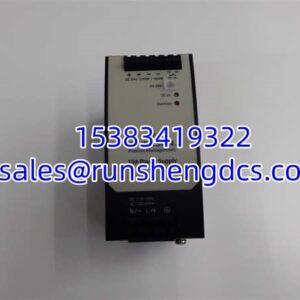
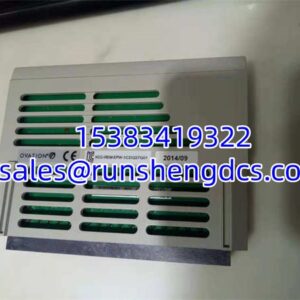
Description
Key Technical Specifications
| Parameter | Value / Note |
|---|
| Parameter | Value / Note |
|---|---|
| Product family | PACSystems RX3i CRU320 redundancy processor |
| Processor | Intel Celeron M, 1 GHz |
| User memory | 64 MB battery-backed RAM + 64 MB non-volatile flash |
| Program blocks | Up to 512 blocks, max 128 KB per block |
| Switchover time | Max 1 logic scan; min 3.133 ms |
| Redundancy sync | Up to 2 × IC695RMX128/228 sync links; up to 2 MB transfer |
| Serial ports | 2 × serial (RS-232 + RS-485) |
| Ethernet | Via IC695ETM001 or other RX3i Ethernet interface module |
| Backplane | RX3i PCI bus + serial backplane; supports Series 90-30 I/O migration |
| Power draw | 1.0 A @ 3.3 VDC; 1.2 A @ 5 VDC |
| Operating temp | 0 °C to 60 °C |
| Certifications | cULus listed; Class I Div 2 Groups A–B–C–D T4; ATEX Ex nA IIC T4; CE |
| Status | End of Life; Emerson recommends CPE330 upgrade |
Product Introduction
A redundant RX3i rack that cannot confirm sync status is not redundant — it is just two expensive CPUs sharing a cabinet. The IC695CRU320CA-EL is the CRU320 redundancy update and synchronization processor for PACSystems RX3i hot-standby pairs. It does not replace the primary CPU; it sits in the rack and continuously mirrors program state, I/O image, and register data from the active controller to the standby controller so failover completes within one logic scan.
The CA-EL suffix signals a certified hazardous-location variant, making it relevant for Class I Div 2 or ATEX Zone 2 installations where the non-EL version would need extra enclosure justification. With 64 MB RAM, 64 MB flash, and sub-scan switchover, it is proven in oil and gas, chemical, and power applications. The hard constraint: CRU320 is End of Life, and Emerson directs users to CPE330. For brownfield sparing, it still makes sense — but only with matched firmware, matched RMX modules, and a confirmed spare strategy.
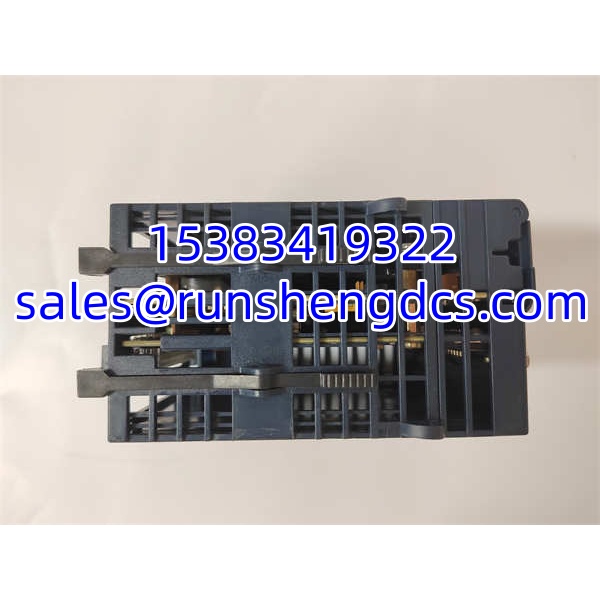
GE IC695CRU320CA-EL
QA/QC Transparency SOP
- Intake & Origin Verification — Record full part number IC695CRU320CA-EL, serial number, hardware revision, and certification labels (cULus, Class I Div 2, ATEX). Inspect PCI connectors, serial ports, and RMX link ports for bent pins or corrosion.
- Live Functional Testing — Install in a verified RX3i universal chassis with known-good power supply. Confirm CPU OK, RUN, SYSFLT, BATTERY, and redundancy LEDs. Verify recognition by Proficy Machine Edition in a test environment.
- Electrical Parameter Tests — Measure backplane current draw at 3.3 VDC and 5 VDC rails under idle and communication load. Confirm values stay within 1.0 A / 1.2 A nominal limits. Check battery voltage for IC695ACC302 or IC693ACC302.
- Firmware/Config Verification — Read firmware revision and compare to the customer’s primary/standby pair. Verify IC695RMX128/228 sync-link module presence and firmware match. Do not flash firmware without authorization.
- Final QC & Anti-Static Packaging — Seal in ESD bag with desiccant. Attach test report covering LED status, backplane current, firmware revision, RMX link check, and battery health. Label as “Verify redundancy pair compatibility before installation.”
Field Engineer Gotchas
- It is not a standalone CPU — Risk: buying a CRU320 expecting a drop-in RX3i controller. Solution: CRU320 is the redundancy synchronization module; the primary/standby CPUs are separate IC695CPU modules. War story: a plant ordered a “redundant CPU” and received a CRU320; it would not run logic alone because it is the sync engine, not the application CPU.
- RMX sync-link mismatch — Risk: redundancy pair fails to synchronize. Solution: both racks must use matched IC695RMX128/228 modules with correct fiber cabling and ring topology. A single mismatched RMX kills the sync link.
- Firmware level mismatch — Risk: primary and standby refuse to pair or report sync faults. Solution: match firmware across primary CPU, standby CPU, and . Do not upgrade one side during a live run.
- Battery failure on legacy stock — Risk: lost RAM retention or false battery faults. Solution: check IC695ACC302 / IC693ACC302 battery date and voltage. RAM is battery-backed; a dead battery shows up at the worst time.
- Hazardous-location misuse — Risk: installing a non-EL unit in a Div 2 area. Solution: confirm the CA-EL certification label. The EL variant carries Class I Div 2 and ATEX markings; a standard may not.
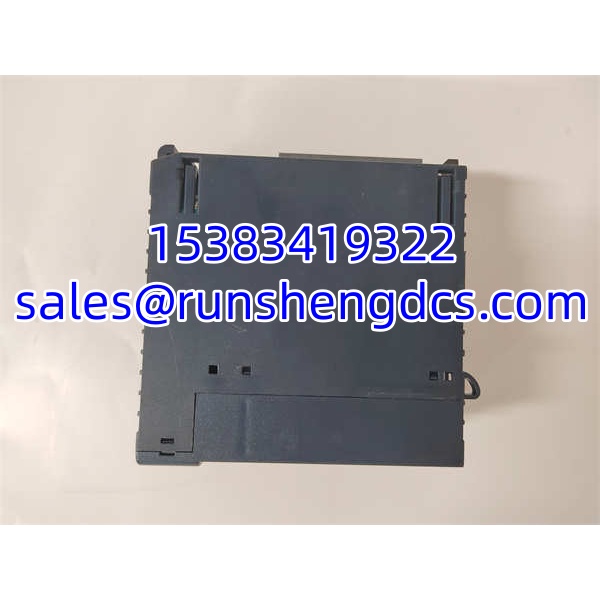
GE IC695CRU320CA-EL
Application Scenarios
- Oil and gas pipeline compressor stations — Continuous suction/discharge control cannot tolerate a single CPU failure. keeps the standby rack synchronized so a processor fault does not shut the station.
- Chemical reactor safety interlocks — Temperature, pressure, and agitation interlocks run on the primary RX3i while mirrors state to the standby rack for bumpless failover.
- Power plant balance-of-plant control — Feedwater, condensate, and auxiliary systems use RX3i redundancy to avoid nuisance trips during maintenance or hardware faults.
- Class I Div 2 process areas — The CA-EL variant provides certified operation in hazardous locations where standard RX3i CPUs would require purged enclosures.
FAQ
1. Is the IC695CRU320CA-EL a CPU or a redundancy module?
It is the redundancy update and synchronization processor. It keeps primary and standby RX3i controllers aligned. It is not a standalone application CPU.
2. What does the CA-EL suffix mean?
CA-EL indicates a certified hazardous-location variant with cULus Class I Div 2 and ATEX markings. Confirm the label before installing in classified areas.
3. Can I use it without IC695RMX modules?
No. A proper redundancy pair requires IC695RMX128/228 sync-link modules and correct fiber cabling.
Emerson lists as End of Life and recommends upgrading to CPE330. It remains viable for brownfield sparing, but new designs should plan migration.
5. What memory does it have?
64 MB battery-backed RAM and 64 MB non-volatile flash, supporting up to 512 program blocks at 128 KB each.
6. Does it have built-in Ethernet?
No. Ethernet communication requires an RX3i Ethernet interface module such as IC695ETM001.
7. What is the switchover time?
Maximum one logic scan, with a minimum of 3.133 ms. Actual bumpless behavior depends on I/O topology and RMX link health.