
Description
Key Technical Specifications
| Parameter | Value |
|---|---|
| Circuits | 8 (each configurable as input or output) |
| Rated Voltage | 115 VAC nominal |
| Operating Voltage Range | 93–132 VAC, single source |
| Frequency | 47–63 Hz |
| Output Current (per channel) | 2A max |
| Input Current | 6 mA typical |
| Electronic Fuse Trip | 30A instantaneous / 20A after 2 cycles, resets in 5ms |
| Block-to-Block Isolation | 1500 VAC |
| Power Dissipation | 16W (8 inputs) / 43.5W (8 outputs at 2A) |
| Standby Power | 8.5W (all I/O off) |
| Operating Temperature | 0°C to 60°C |
| Storage Temperature | -40°C to 100°C |
| Dimensions (H×W×D) | 8.83 × 3.34 × 3.91 in (22.4 × 8.5 × 9.9 cm) |
| Weight | 4 lbs (1.8 kg) |
| Required Terminal Assembly | IC660TSD101 |
| Compatible HHM | IC660HHM501 (full config), IC660HHM500 (limited) |
Product Introduction
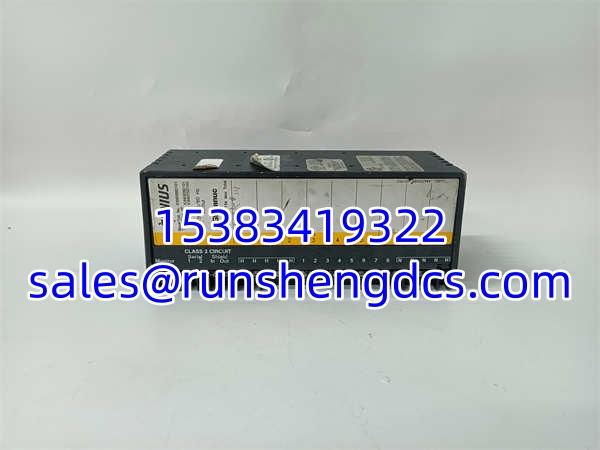
You don’t install a Genius I/O block because you want to — you install it because the PLC is 500 feet away from the field devices and running individual hardwires back to a centralized panel would cost more in copper than the entire control system. The IC660BBD101 is a low-leakage, 8-circuit, 115VAC combo I/O block in GE Fanuc’s Genius I/O platform. Each of its 8 circuits is independently configurable as either a discrete input or output, making it a flexible drop-in for mixed sensor/actuator clusters. It draws module power directly from the field voltage — no separate 24VDC supply needed for the block itself.
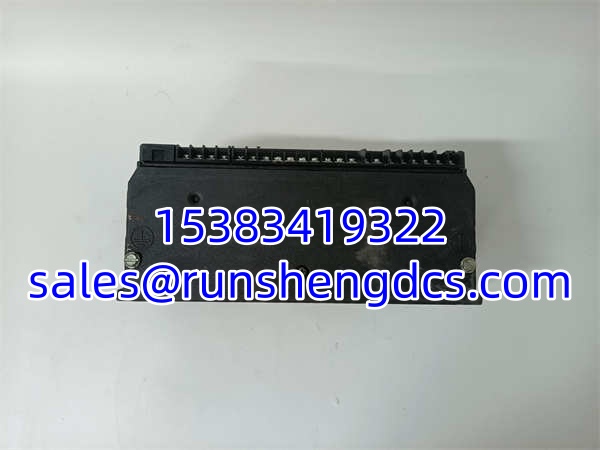
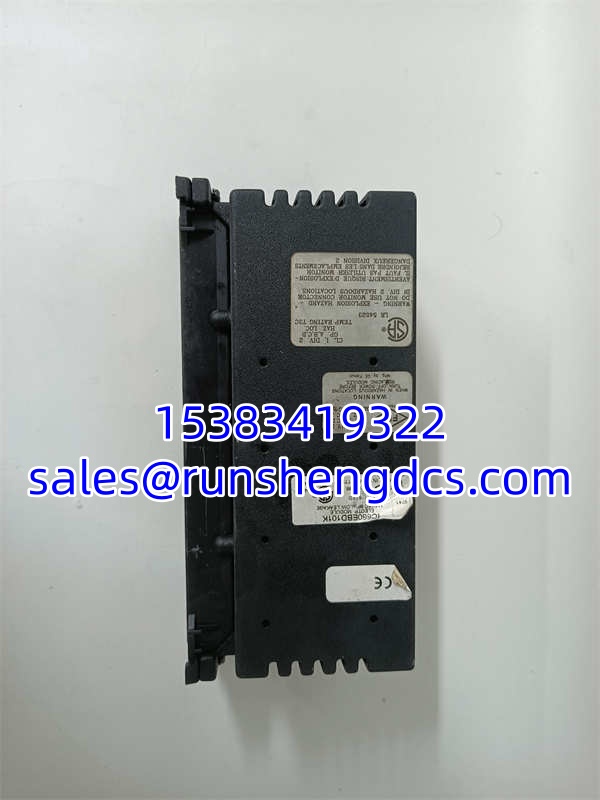
The IC660EBD101 is the electronic assembly that slides into the IC660TSD101 terminal base to form the complete IC660BBD101 block. That distinction matters when ordering spares: buy the EBD101 if you’re replacing just the electronics on an existing terminal strip, or the BBD101 if you need the full assembly. The module includes per-channel electronic fusing (trips at 30A instantaneous, 20A after 2 cycles, resets via CPU or HHM command), selectable input filtering (10ms to 100ms), and diagnostics covering overtemperature, open-load, no-load, and switch-fault conditions. It’s backward-compatible with the older IC660BBD100 and IC660CBD100 blocks, which makes it a common upgrade path on aging Series 90-30 and IC550 installations.
QA/QC Transparency SOP
- Intake & Origin Verification: Every IC660BBD101 is inspected for physical damage — cracked housings, corroded bus connectors, and bent terminal pins. We verify the revision suffix (e.g., EBD101F vs. EBD101D) against your system’s existing configuration, because revision mismatches can cause terminal incompatibility.
- Live Functional Testing: The IC660EBD101 is mounted on a Genius bus test rack with a known-good bus controller. We cycle all 8 channels as inputs and outputs, verifying LED indication, bus acknowledgment, and HHM diagnostic readback.
- Electrical Parameter Tests: Using a calibrated Fluke 87V, we verify operating voltage tolerance across the 93–132 VAC range, check block-to-block isolation integrity, and confirm electronic fuse trip thresholds on each channel.
- Firmware/Config Verification: The module’s internal configuration is read via HHM to confirm baud rate, input filter settings, and power-up defaults match the target system parameters. Data is logged and archived.
- Final QC & Anti-Static Packaging: Passed units are cleaned, labeled with test date and revision, and sealed in ESD-shielded bags with desiccant. The IC660TSD101 terminal screws are torqued to spec if a full block assembly is shipped.
Field Engineer Gotchas
- Terminal Assembly Revision Mismatch: The IC660TSD100E and later terminal assemblies are not compatible with older IC660EBD101 revisions (pre-F). If you swap in a new terminal strip without upgrading the electronics, you’ll get intermittent bus faults or no communication at all. Solution: Always match the EBD101 revision suffix to the TSD101 version, or replace both as a set. I’ve seen a tech spend half a shift chasing a “bad bus cable” when the real problem was a TSD100E mated to an EBD101D.
- No Separate Module Power: The BBD101 taps its operating power from the field-side 115VAC supply. If your field power is down or sagging below 93 VAC, the block goes dead — and the bus controller will report it as a communication failure, not a power fault. Solution: Check field voltage at the terminal strip before chasing bus diagnostics.
- Electronic Fuse Reset Requires Command: When a channel trips its electronic fuse, it doesn’t auto-recover. You have to issue a reset command from the CPU or HHM. Warning: If you’re seeing channels that won’t come back after a fault, check whether your ladder logic includes the reset instruction. It’s not a hardware failure — it’s a missing line of code.
- Heat Dissipation in Enclosures: At 43.5W with all 8 outputs energized at 2A, this block runs warm. Cramming it into a sealed NEMA 4X box with no airflow will push it past the 60°C operating limit on a hot day. Solution: Provide at least 2 inches of clearance above and below the block, or add a ventilation port.
GE IC660BBD101 IC660EBD101
Application Scenarios
- Series 90-30 Remote I/O Expansion: The BBD101 sits on a Genius bus segment 300+ feet from the PLC rack, reading limit switches and driving solenoid valves on a packaging line without running individual wires back to the main panel.
- IC550 Bus-Controlled Process Skids: Small skid-mounted systems use the BBD101 as the primary field interface, with the IC550 bus controller polling the block over the Genius serial bus.
- Retrofit Replacements for BBD100/CBD100: Plants migrating off the original BBD100 blocks use the BBD101 as a direct backward-compatible replacement, taking advantage of the improved diagnostics and electronic fusing.
- Case Study: A water treatment facility had a Genius bus segment with three BBD100 blocks controlling chemical feed valves. Two blocks started dropping off the bus intermittently. Diagnostics via HHM showed “Switch Fault” errors. The blocks were replaced with BBD101 units, which provided per-channel electronic fusing and open-load detection. The root cause turned out to be a failing solenoid coil drawing excessive current — the old BBD100 blocks couldn’t isolate the fault to a single channel, but the ‘s channel-level diagnostics pinpointed it immediately.
FAQ
- What’s the difference between IC660BBD101 and IC660EBD101?
The is the complete block assembly (electronics + terminal base). The EBD101 is just the electronic module that plugs into the IC660TSD101 terminal strip. If your terminal strip is intact, you only need the EBD101. If you need the whole thing, order the . - Can I use this with a Series 90-30 PLC?
Yes, but you need a Genius Bus Interface Module (BIM) like the IC693BEM331 in the PLC rack to talk to the Genius bus. The doesn’t connect directly to the PLC backplane. - Is the IC660EBD101F compatible with my IC660TSD100B terminal?
Check your terminal revision carefully. The TSD100E and later terminals require EBD101F or higher. Older terminals (TSD100D and earlier) are not compatible with newer EBD101 revisions. Verify both part numbers before ordering. - Does this module need a separate 24VDC power supply?
No. The draws its operating power from the 115VAC field supply connected to its terminals. No separate module power is required. - Can I hot-swap this block on a live Genius bus?
No. Genius I/O blocks are not designed for hot-swap. Power down the bus segment, replace the block, then restore power. Hot-swapping can damage the bus transceiver. - What handheld monitor do I need to configure this?
The IC660HHM501 supports full configuration including baud rate changes and redundancy setup. The older HHM500 can monitor but cannot change baud rate or configure redundancy. - Is this module still manufactured?
No. The Genius I/O platform is discontinued. GE/Emerson migrated to the IC670/PACSystems platform. The is available only through surplus and aftermarket channels.