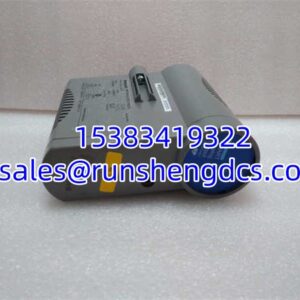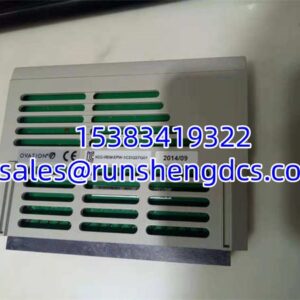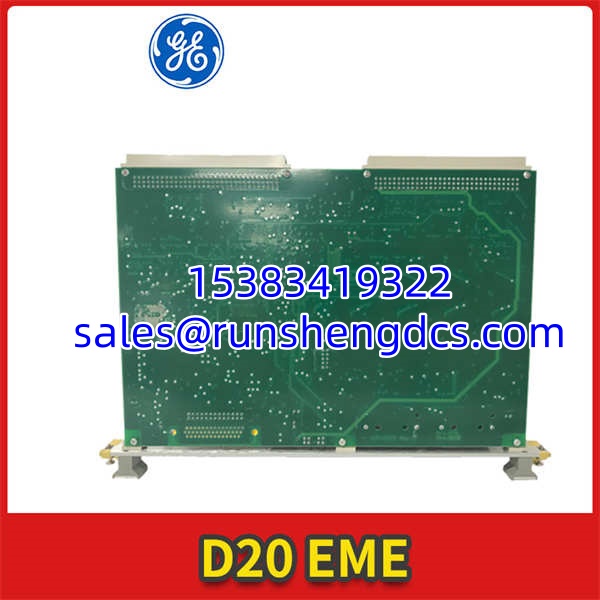
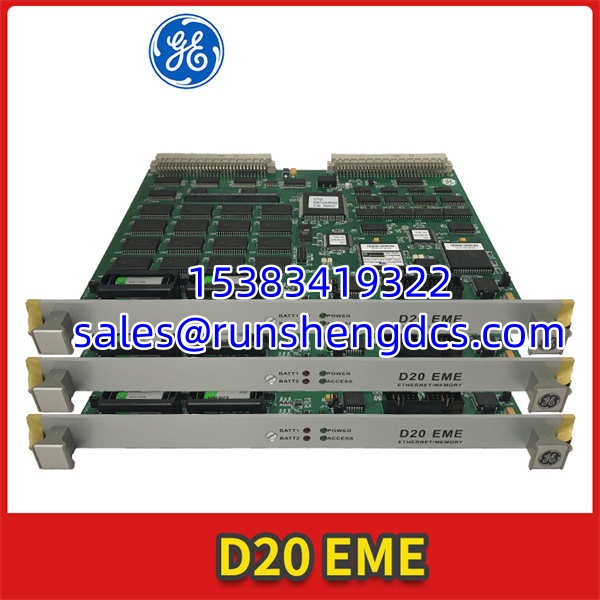

Description
Key Technical Specifications
- Product Model: D20 EME 10BASE-T
- Manufacturer: GE / GE Fanuc / GE Energy
- Product Type: WESDAC Processor / Media Interface Card
- Processing Speed: 133 MHz
- Data Capacity: 120 KB
- Communication Interface: 10BASE-T Ethernet (Twisted-pair)
- Work Voltage: 12 VDC
- Operating Temperature: -20°C to 60°C
- Environmental Humidity: 0% to 95% (non-condensing)
- Physical Dimensions: 4.4 cm x 48 cm
- Weight: 1.5 kg
- Certifications: UL
Product Introduction
Substation automation networks built in the early 2000s rely heavily on 10BASE-T Ethernet for data concentration, and finding replacement media interface cards for these legacy systems is a common headache for field engineers. The GE D20 EME 10BASE-T module was designed specifically for this purpose, serving as the critical communication bridge between field-level Intelligent Electronic Devices (IEDs) and upstream SCADA, EMS, or DMS master stations. It acts as a data concentrator and protocol converter, consolidating serial and Ethernet traffic within the D20 controller chassis.
Engineers specify the GE D20 EME 10BASE-T because it is purpose-built for mission-critical power generation environments, not generic IT networking. With a 133 MHz processing speed and 120 KB of data capacity, it handles the translation of SCADA host protocols and IED messages without dropping packets under heavy fault-reporting loads. Bottom line — if your substation still relies on a GE D20 controller for capacitor bank control, feeder optimization, or interlocking logic, this specific 10BASE-T card is the exact communication path keeping that local automation platform alive.
QA/QC Transparency SOP
Surplus substation gear has to survive harsh electrical environments, so we don’t just ship it blind. Here is how we verify a GE D20 EME 10BASE-T module:
- Intake & Origin Verification: We verify the hardware revision against GE WESDAC documentation to ensure the Ethernet MAC address block and backplane pinout match the target D20 chassis.
- Live Functional Testing: The card is installed in a live D20 test rack. We inject 10BASE-T traffic and verify that the module successfully negotiates link speed, passes data, and communicates with the central control unit (CCU) over the VME backplane.
- Electrical Parameter Tests: Using a Fluke multimeter, we verify the 12 VDC input regulation and check for any shorted decoupling capacitors on the Ethernet magnetics.
- Firmware/Config Verification: We read the onboard EEPROM to verify the firmware version and back up the configuration data to ensure the card boots correctly when installed.
- Final QC & Anti-Static Packaging: The module is cleaned, inspected for bent backplane pins, and sealed in an anti-static bag with desiccant to protect the Ethernet PHY during transit.
Field Engineer Gotchas
- Backplane CCU Compatibility: The GE D20 EME 10BASE-T requires the main CCU (Central Control Unit) board to have the correct base software to access Ethernet facilities over the VME backplane. If you swap this card into an older D200 chassis and get no link, the CCU firmware may not support the newer EME card. Verify CCU compatibility first.
- Interconnect Cable Seating: The 10BASE-T signaling is carried from the main EME card to the Media Interface Card (MIC) via a specific interconnect cable (e.g., GE P/N 977-0298). If you replace the card and lose comms, check that this internal ribbon/interconnect cable is fully seated and not pinched. I’ve seen techs blame a bad card when it was just a loose internal cable.
- 12 VDC Power Rail Sag: This module runs on 12 VDC. Substation batteries age, and if your DC bus sags below spec during a fault event, the Ethernet PHY will brown out and drop SCADA communications right when you need it most. Measure the 12V rail under load before installing a new card.
- ESD on Ethernet Magnetics: The 10BASE-T transformer/isolation components are sensitive to ESD. Always wear a grounded wrist strap when handling the GE D20 EME 10BASE-T. A static hit can partially degrade the magnetics, causing intermittent CRC errors that take hours to diagnose.
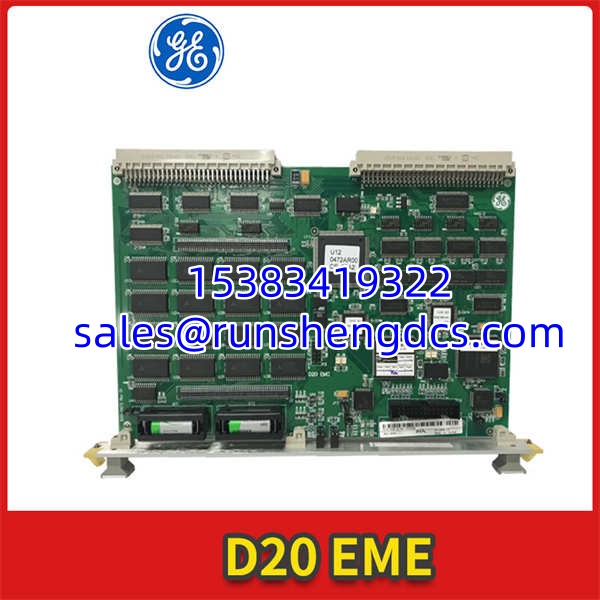
GE D20 EME 10BASE-T
Application Scenarios
- Substation Data Concentration: The GE D20 EME 10BASE-T is deployed in GE D20 controllers to automatically consolidate collected information from serial IEDs (relays, meters) and route it to SCADA and Data Historian systems via Ethernet.
- Protocol Conversion for Legacy IEDs: In mixed-vendor substations, this module acts as a protocol converter, translating different data message formats between older serial devices and modern Ethernet-based master stations.
- Local Distribution Automation: Used as the local automation platform to execute real-time logic for capacitor bank switching, outage prevention programs, and feeder resource optimization without relying on upstream master station latency.