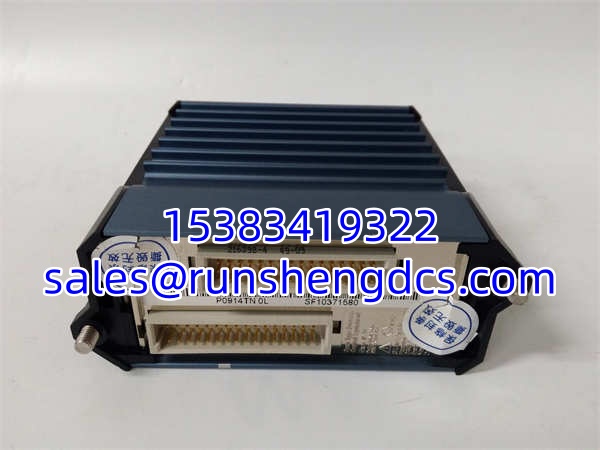

Description
Key Technical Specifications
| Parameter | Value |
|---|---|
| Product Model | FOXBORO P0914TN |
| Manufacturer | FOXBORO / Schneider Electric |
| Product Type | Discrete Input Channel Module |
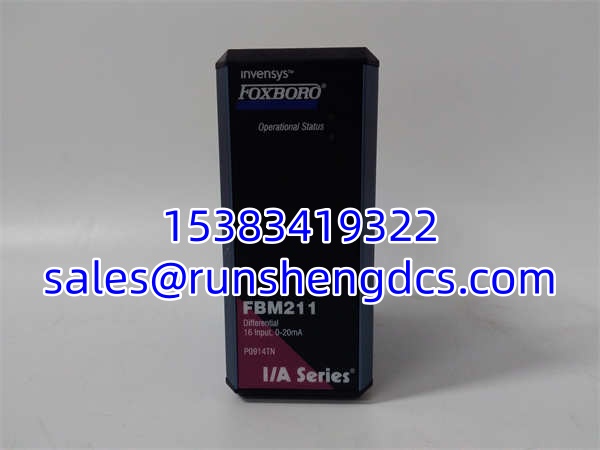
| Module Designation | FBM211 |
| System Series | I/A Series DCS |
| Function | Discrete Signal Monitoring (On/Off) |
| Mounting | I/A Series 200 Series Baseplate |
| Hot-Swap Support | Yes (I/A Series standard) |
| Operating Temperature | 0°C to +60°C (verify with OEM datasheet) |
| Diagnostic Indicators | Channel status, module fault LEDs |
| Signal Type | Discrete (Dry Contact / Voltage) |
| Wiring Interface | Standardized Termination Assembly (TA) |
Product Introduction
Your I/A Series node is reporting a bad discrete channel, and the field operator is complaining that a limit switch isn’t registering. You need a reliable digital input card to restore visibility to the control room.
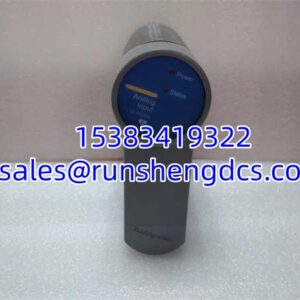
The FOXBORO P0914TN is an FBM211 discrete input channel module for the I/A Series DCS. It sits at the field boundary, accepting discrete signals from switches, relays, and contact closures, then converting them into digital states the I/A Series controller can process. The module provides galvanic isolation between field wiring and the node bus, protecting the control system from ground loops and electrical noise. Each P0914TN handles multiple discrete channels, making it the workhorse for binary status monitoring across the plant.
Why does the exact part number matter? Because FOXBORO’s FBM family uses the same physical form factor across dozens of module types. A P0914TN (FBM211) is not interchangeable with an FBM218 or FBM222. The internal resistor networks, opto-isolators, and configuration registers are all different. Install the wrong FBM and the controller either won’t recognize it or will read garbage values. The P0914TN supports hot-swap replacement on a live I/A Series node bus. Bottom line — match the part number exactly, and verify the signal type in the controller database before you install.
QA/QC Transparency SOP
Every P0914TN we handle goes through a five-step inspection process before it ships. No shortcuts.
- Intake & Origin Verification: We verify the part number , lot code, and all manufacturer markings against the FOXBORO/Schneider Electric authenticity database. We check the FBM connector pins, housing label, and FBM211 designation for signs of tampering or re-labeling.
- Live Functional Testing (Comms, I/O, Load): The plugs into a calibrated I/A Series test rack. We inject discrete signals across all channels and verify that the module reports correct on/off states. We confirm the node bus recognizes the FBM211 designation.
- Electrical Parameter Tests (Megger, Continuity): Using a Fluke 87V multimeter and a high-voltage megger, we test galvanic isolation between field terminals and the node bus interface. We verify continuity on all power and signal paths to ensure no open circuits or solder defects.
- Firmware/Config Verification (Readout & Backup): We read the ‘s configuration registers through the I/A Series test system and compare against OEM defaults for the FBM211. Any deviation in channel count or diagnostic parameters flags the unit for rejection.
- Final QC & Anti-Static Packaging: Visual inspection under magnification checks for solder joint quality, connector pin alignment, and PCB integrity. The then goes into an anti-static bag with desiccant, sealed and labeled with test results, date, and lot traceability.
Field Engineer Gotchas
FBM Type Confusion: The is an discrete input module. It is NOT an FBM218 (discrete output), FBM222 (analog input), or any other FBM variant. They all look identical from the outside. If someone grabbed the wrong box from the spare parts shelf, you’ll install a module that the controller either rejects or misreads. Always verify the label reads AND before installation. We had a job where the unit kept reporting phantom discrete faults — turned out the spare was an FBM218 (output), not an . Check the label twice.
Signal Type Configuration: The accepts discrete signals, but the signal type (dry contact vs. voltage) must be configured in the I/A Series controller database. If the field is wired for dry contact but the database expects voltage, the will report nonsense. Always verify the signal type in the controller config matches the field wiring. Don’t assume the previous technician got it right.
Node Bus Termination: The communicates over the I/A Series node bus. If you’re adding this module to an existing node, verify the bus termination is correct. Missing or incorrect termination causes intermittent communication faults that look like bad FBM channels. Pro tip: check the termination resistor at the last FBM slot in the node. We’ve seen hours wasted replacing good FBMs when the real problem was a missing terminator.
ESD Damage on Hot-Swap: Yes, the I/A Series supports hot-swap. But the ‘s input stage is sensitive to ESD. Wear an ESD strap. We’ve seen FBMs that passed bench test but failed in-field after an ungrounded hot-swap. The node bus supplies power the moment the module seats. One spark and the opto-isolator is toast. Ground yourself. Always.
Backplane Power Budget: Each draws power from the I/A Series node bus. If you’re filling a node with high-density discrete FBMs, check the power supply capacity. Overloading the bus causes brownouts that manifest as intermittent channel faults — nasty to troubleshoot at 2am. Verify your node power budget before adding modules.
Application Scenarios
Refinery Process Control: Pumps, compressors, and valves generate hundreds of discrete status signals — running, stopped, faulted, tripped. The feeds these signals into the I/A Series controller with galvanic isolation from the field. A single bad discrete reading in an interlock loop can cause an unnecessary shutdown. The keeps those statuses accurate.
Power Plant Safety Systems: Breaker status, fan dampers, and lube oil skid outputs rely on precise discrete inputs for protection logic. The handles dry contact signals in electrically noisy turbine environments. Galvanic isolation prevents ground loops from corrupting critical safety signals. False readings here mean unstable protection.
Chemical Batch Processing: Reactor interlocks, alarm beacons, and purge solenoids require accurate discrete inputs for batch recipe control. The provides the signal conditioning that ensures batch consistency. A drifted discrete channel can ruin an entire $500K batch. The catches bad signals before they corrupt the recipe.
Water Treatment Plant Monitoring: Gate valves, blower starters, and dosing pump enable signals feed discrete inputs to the I/A Series system. The conditions these signals across long cable runs where noise and ground loops are common. Reliable discrete data means regulatory compliance and efficient plant operation.
Case Study — Phantom Discrete Fault: A chemical plant was getting erratic pump status readings on their I/A Series system. Maintenance replaced two modules with no improvement. Root cause: the FBM was actually fine. The problem was a corroded terminal block connection that created a variable resistance in the discrete loop. The was faithfully reporting the bad signal. Replaced the terminal block. Reading stabilized. Lesson: don’t assume the FBM is bad. Check the entire signal chain first.
FAQ
- The is specifically an discrete input module. Other FBMs handle discrete outputs, analog inputs, or analog outputs. They share the same physical form factor but have different internal circuitry and configuration registers. Never substitute one FBM type for another. Verify the exact part number and FBM designation.
- Yes. The can be replaced online on a live I/A Series node bus. The node continues operating with the remaining FBMs while you pull the faulty unit and insert the spare. Wear an ESD strap and handle the module by the edges. The node bus powers up the module the instant it seats.
- The () accepts discrete signals, typically dry contacts or voltage levels. The actual signal type is configured in the I/A Series controller database, not on the module itself. Verify your signal type matches the database configuration before installation.
- Check the module label for the exact part number and the designation. Verify the lot code matches FOXBORO/Schneider Electric formatting. Genuine FBMs have precise internal components; counterfeits often use wrong-value resistors that cause calibration drift. If the price seems too good to be true, it probably is. Buy from a trusted source.
- The is compatible with standard I/A Series 200 Series FBM nodes. Verify your node type and firmware version in the I/A Series documentation. Some older node revisions may have compatibility limitations. Check the FOXBORO compatibility matrix before ordering.
- What happens if I install the wrong FBM type?
Worst case: you damage the module or the node bus. Best case: the controller rejects the module or reads incorrect values. The has specific internal circuitry for discrete input conditioning. Wrong FBM type = wrong function. Always verify the part number and FBM designation before installation. Don’t guess. - The is a legacy I/A Series module. Availability from the OEM may be limited. Surplus and refurbished units from trusted suppliers are a viable option for maintaining existing installations. Verify the module has been tested and comes with a warranty. For new installations, consult FOXBORO/Schneider Electric about current-generation replacements.