
Description
Key Technical Specifications
| Parameter | Details |
|---|---|
| Manufacturer | FOXBORO (Invensys / Schneider Electric) |
| Product type | 16-channel isolated discrete input module |
| Model | FBM207C |
| Order code | P0917GY (RH917GY often appears as a label/marking variant) |
| Input type | Contact-sense (dry contact / solid-state switch) |
| Nominal input voltage | 48 VDC |
| Channel count | 16 |
| Isolation | Channel-isolated discrete inputs |
| Compatible system | FOXBORO I/A Series DCS |
| Required hardware | Matching Terminal Assembly (TA) for field wiring |
| Redundancy | Optional redundant configuration (system-dependent) |
| Product status | Installed-base / legacy spare |
Product Introduction
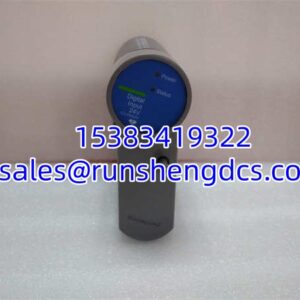
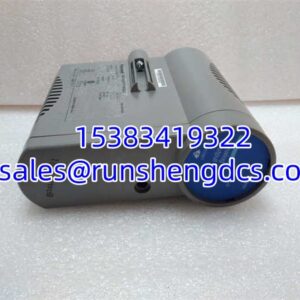
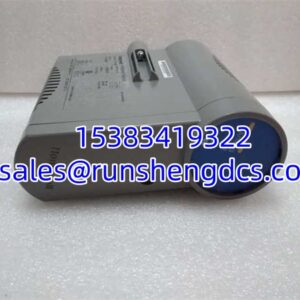
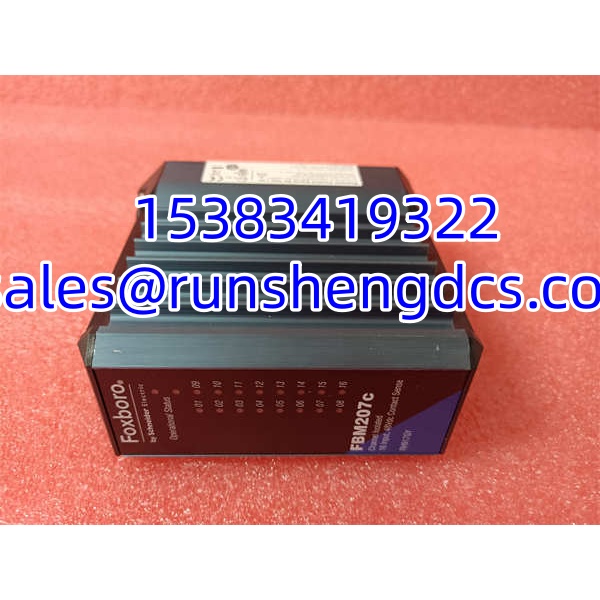
Pulling a discrete input card from a live I/A Series rack without confirming the terminal assembly is how you turn a 15-minute swap into a half-day commissioning headache. The FOXBORO FBM207C (P0917GY) is a 16-channel isolated discrete input module designed for 48 VDC contact-sense applications. It does not read 4–20 mA, thermocouples, or 120 VAC status signals — that is what other FBM207 variants and different FBM families are for.
This module sits on the I/A Series field bus and reports contact status back to the control processor. Each of the 16 channels is isolated, which matters when you are reading contacts from different potential references across a process unit. The FBM207C must be paired with the correct Terminal Assembly; the TA handles the field-side wiring, voltage conditioning, and isolation boundary. Bottom line — the FBM and the TA are a matched set. Do not buy one without confirming the other.
QA/QC Transparency SOP
- Intake & Origin Verification — Confirm the label reads FBM207C and P0917GY (or RH917GY marking). Photograph the nameplate, revision, serial number, and connector side. Reject units with bent pins, corrosion, or mismatched labels.
- Live Functional Testing — Install in a compatible I/A Series test rack or FBM test fixture. Apply 48 VDC contact-sense signals to multiple channels. Verify that each channel reports the correct open/closed state to the controller.
- Electrical Parameter Tests — Check channel isolation, input impedance, and insulation resistance. Verify no crosstalk between adjacent channels and no false triggering with open inputs.
- Firmware/Config Verification — Read module identity and compare against the target I/A Series node configuration. Confirm the channel map, debounce/filter settings, and redundancy assignment match the existing project.
- Final QC & Anti-Static Packaging — Validate stable channel readings, clean diagnostics, and correct LED indicators. Pack in ESD-safe materials with a test record and photo documentation.
Field Engineer Gotchas
- FBM207 vs. FBM207b vs. FBM207C. The base FBM207 is a voltage-monitoring input, FBM207b is 24 VDC contact-sense, and FBM207C is 48 VDC contact-sense. Swapping a “C” into a “b” application will give you wrong readings or no readings at all. Match the suffix.
- Terminal Assembly mismatch. The FBM cannot connect directly to field wiring. If the existing TA is built for FBM207b or a different voltage class, the will not behave correctly even if it physically seats.
- Voltage level confusion. Some listings describe the FBM207 family as supporting 15–60 VDC, 120 VAC, or 240 VAC, but those ratings depend on the specific variant and TA. The itself is specified for 48 VDC contact-sense. Do not assume universal voltage compatibility.
- Redundancy is not automatic. The can be configured redundantly in some I/A Series applications, but redundancy must be defined in the control strategy and supported by the node hardware. Dropping in a second card does not create redundancy by itself.
- Surplus listing errors. Vendor titles frequently mislabel as a controller, analog module, or universal DI card. Trust the nameplate, not the listing headline.
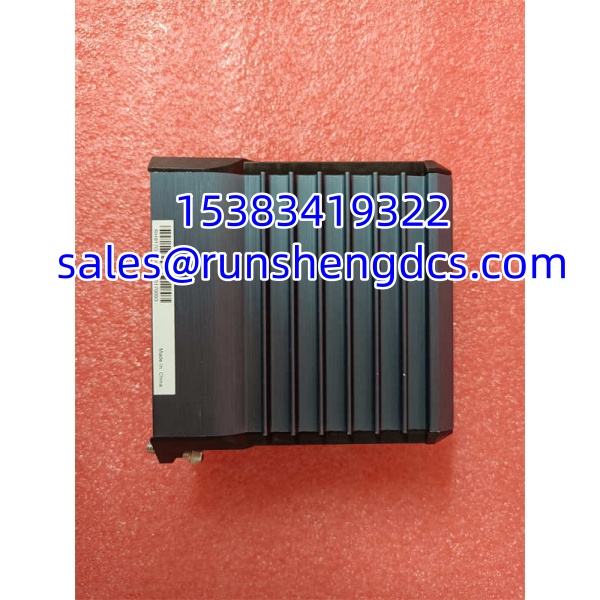
FOXBORO FBM207C RH917GY
Application Scenarios
- Power generation switchgear status: Reading auxiliary contacts from 48 VDC breaker position switches and relay status contacts.
- Oil and gas compressor packages: Monitoring pressure switch contacts, permissive interlocks, and shutdown system discrete inputs.
- Water/wastewater lift stations: Accepting float switch and valve position feedback signals in electrically noisy environments.
- Pulp and paper machine sections: Reading roll position limits, guard interlocks, and emergency-stop circuit status.
FAQ
Yes. P0917GY is the order code for the 16-channel 48 VDC contact-sense input module. “RH917GY” is commonly seen as a label or marking variant — confirm on the physical nameplate.
No. is specified for 48 VDC contact-sense. For 24 VDC contact inputs, use FBM207b.
Does it accept 4–20 mA or 0–10 V?
No. It is a discrete input module, not an analog input module. Use FBM201, FBM211, or another analog FBM for current/voltage signals.
Do I need a Terminal Assembly?
Yes. The requires a matching TA for field wiring and signal conditioning. The FBM alone cannot connect to field devices.
Is it still in production?
Availability is limited. Most units circulate as surplus, used, or refurbished. Verify revision, TA compatibility, and test status before purchase.
Can it be used redundantly?
It can support redundant configuration in applicable I/A Series setups, but redundancy must be engineered in the control strategy and hardware layout. Do not assume a single spare card provides redundancy.