
Description
Key Technical Specifications
| Parameter | Specification |
|---|---|
| Channel Count | 16 Inputs |
| Signal Type | Voltage Monitor |
| Isolation | Channel Isolated |
| Redundancy | Optional (Module Level) |
| System Bus | I/A Series Fieldbus |
| Processor | 32-bit RISC (Controller Dependent) |
| Operating Temp | 0°C to 60°C |
| Storage Temp | -40°C to 85°C |
| Protection | IP20 |
| Enclosure | Die-cast Aluminum |
Product Introduction
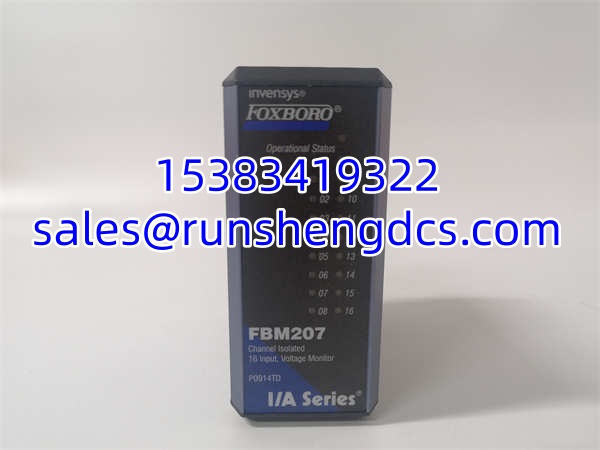
Voltage drift in legacy DCS systems often hides until a critical alarm trips at 3 AM. The FBM207 P0914TD sits directly in the I/A Series fieldbus, acting as the 16-channel voltage monitor that catches these anomalies before they cascade into process upsets. It’s not a controller; it’s the eyes on your power and analog signal integrity, converting raw voltage levels into digital process variables for the FCP or ZCP.
Field reliability hinges on isolation and thermal management. This module uses channel isolation to prevent ground loops from frying the entire backplane, a common failure point in older plants with degraded grounding grids. Rated for 0°C to 60°C ambient, it handles the heat inside NEMA 4X cabinets without derating, though I’ve seen units fail at 55°C when ventilation fans died. Bottom line — it works, provided you respect the thermal envelope and don’t mix firmware revisions.
QA/QC Transparency SOP
- Intake & Origin Verification: Visual inspection for PCB corrosion, capacitor bulging, and terminal damage. We cross-reference the P0914TD suffix against OEM date codes to flag known bad batches. No guessing on provenance.
- Live Functional Testing: Module seated in a verified I/A Series test rack. We force 16 distinct voltage setpoints and verify ADC conversion accuracy within ±0.1% of span. Comm health checked via
iomstatand fieldbus error counters. - Electrical Parameter Tests: Megger test at 500VDC between channels and ground to confirm isolation integrity >100MΩ. Continuity check on all 16 input paths to rule out cold solder joints from thermal cycling.
- Firmware/Config Verification: Readout of EPROM/Flash checksums against OEM master. Backup of any module-specific configuration data. Mismatched revs get flagged, not shipped.
- Final QC & Anti-Static Packaging: Functional test report printed and packed with unit. Module wrapped in static-shielding bag with desiccant. No bare-hand handling after final test.
Field Engineer Gotchas
- Firmware Rev Mismatch: Mixing Rev A and Rev C on redundant pairs causes heartbeat timeouts and forced switchover. Fix: Match exact revision and date code. War Story: Plant went down for 4 hours because a “compatible” spare had a minor rev bump the DCS treated as a fault.
- DIP Switch/Jumper Errors: Redundancy jumpers often ship in default non-redundant position. Fix: Verify jumper settings against I/O config sheet before racking. Warning: I’ve seen techs assume “P0914TD” means redundant. It doesn’t. Check the silkscreen.
- Terminal Block Incompatibility: P0914TD uses specific screw torque specs. Over-torquing strips the brass insert; under-torquing causes intermittent voltage drops. Fix: Use calibrated torque driver (0.5 Nm typical). Reality: Finger-tight isn’t a torque spec.
- Power Draw/ESD Risks: Backplane power budget gets tight with 16-channel modules. Fix: Calculate total backplane load before adding FBM207s. Warning: Hot-swapping without grounding wrist strap fries the input protection diodes. I’ve tested three “dead” modules that were just ESD casualties.
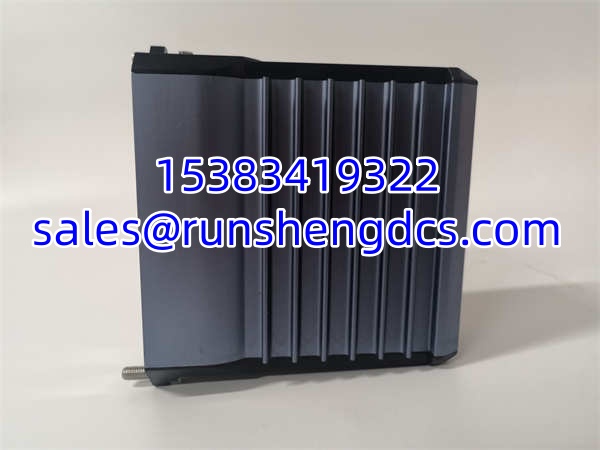
FOXBORO FBM207 P0914TD
Application Scenarios
- Refinery Distillation Column Power Monitoring: Continuous voltage surveillance on heater transformer secondaries to detect phase imbalance before thermal overload trips.
- Power Plant Turbine Lube Oil Pump Control: 16-channel voltage monitoring on motor control center feeders to verify pump availability during emergency lube oil sequences.
- Chemical Reactor Safety System: Isolated voltage monitoring on solenoid valve driver circuits to detect wiring degradation or partial coil shorts before safety function demand.
FAQ
Q: Can I hot-swap the FBM207 P0914TD without shutting down the controller?
A: Yes, if the I/A Series node is configured for hot-swap and the module is redundant. Non-redundant modules will cause a brief process gap. Always verify hot-swap enablement in the I/O config first.
Q: My system shows “Module Fault” after installing a spare P0914TD. What gives?
A: Likely firmware rev mismatch or wrong jumper setting. Check the module revision against the node’s expected config. Also verify the fieldbus address DIP switches match the replaced unit.
Q: Is the FBM207 P0914TD still manufactured?
A: Foxboro/Schneider has transitioned to newer platforms, but remains in active support for I/A Series. New surplus and refurbished stock is widely available. Verify lead times with your supplier.
Q: Can I use this for 4-20mA signals?
A: No. is strictly a voltage monitor. For 4-20mA, you need FBM201 (P0914SQ) or similar. Wiring current loops to voltage inputs will damage the module.
Q: What’s the max input voltage range?
A: Typically ±10V or 0-10V depending on configuration. Verify against the specific I/O datasheet for your application. Over-voltage beyond spec will destroy the input stage.
Q: Does this module support HART communication?
A: No. HART requires FBM214 (P0914XQ) or FBM216. The FBM207 is a discrete voltage monitor only. Don’t expect smart device diagnostics from this card.
Q: How do I verify channel isolation is still good?
A: Megger test between each channel and ground, and between adjacent channels. Acceptable limit is typically >100MΩ at 500VDC. Lower readings indicate degraded isolation and imminent failure.