Description
Product Introduction
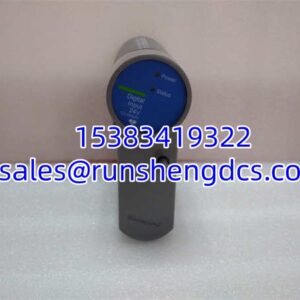
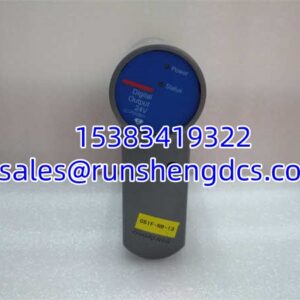
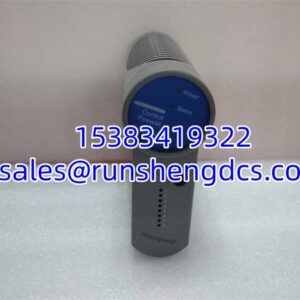
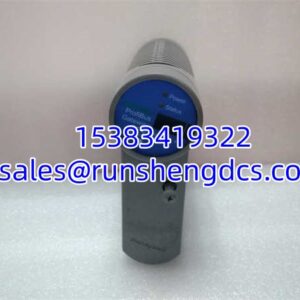
When a 100-megawatt steam turbine starts showing micro-vibrations, you don’t have time to troubleshoot a faulty monitoring card. That’s where the Emerson A6110 earns its keep. Designed specifically for the most critical rotating equipment in your plant, this dual-channel relative shaft vibration monitor acts as the first line of defense against catastrophic mechanical failure.
Unlike older, bulkier monitoring systems, the A6110 is a 3U single-slot module that cuts your rack space requirements in half compared to traditional 6U cards. It continuously measures the relative vibration of the shaft against the bearing housing using non-contact eddy current sensors. If the vibration crosses your configured thresholds, the module doesn’t just log a fault—it drives relays and outputs to initiate an alarm or safely shut down the machine. It’s built for hot-swapping, meaning you can replace it without shutting down the entire protection system.
Key Technical Specifications
- Module Size: 3U, 1-Slot Plug-in Module
- Measurement Modes: Zero-to-Peak, Peak-to-Peak, True Smax (API 670 / DIN 45670)
- Input Type: Eddy Current, Differential
- Input Voltage Range: 0 to -22 VDC
- Frequency Range: 50 – 2000 Hz (Adjustable upper cutoff)
- Analog Outputs: 0/4-20 mA, 0-10 VDC (Proportional to main value)
- Buffered Outputs: Front panel buffered raw sensor signals
- Sensor Power: Independent, isolated, open/short circuit protected
- Hot-Swappable: Yes (API 670 compliant)
- Self-Diagnostics: Hardware, power, temperature, sensor, and cable monitoring
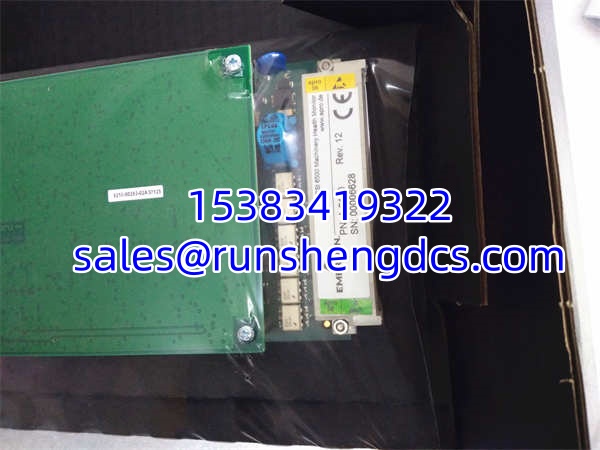
EMERSON A6110
Compatibility & Replacement Matrix
- Legacy 6U 4-Channel Cards → A6110: Space Upgrade — Replaces older 6U cards; reduces rack footprint by 50% while maintaining dual-channel functionality.
- PR6422/6423/6424/6425 Sensors → A6110: Direct Fit — Natively compatible with Emerson eddy current displacement sensors.
- CON 011/91, 021/91, 041/91 Drivers → A6110: Direct Fit — Compatible with standard Emerson signal conditioners.
- A6120 / A6125 → A6110: System Sibling — Different measurement types (e.g., absolute vibration); do not substitute without verifying mechanical protection requirements.
Quality Inspection & SOP Transparency
Here is how we verify every before it ships to your facility.
- Incoming Inspection
- Verify the part number (e.g., 9199-00001) and revision against the Emerson database.
- Visual inspection: Check the 48-pin DIN 41612 backplane connector for bent pins or oxidation. Ensure the front panel LEDs are intact.
- Live Functional Test
- Environment: Slotted into a live AMS 6500 test rack with A6910 configuration software.
- Sensor Simulation: Inject a calibrated eddy current signal. Verify the module accurately reads the gap voltage and vibration amplitude.
- Alarm Verification: Force a signal above the configured Alert and Danger setpoints. Verify the front panel LEDs illuminate and the relay outputs trigger within the configured delay time.
- Electrical Parameter Test
- Output Calibration: Measure the 4-20 mA and 0-10 VDC outputs against a precision multimeter. Accuracy must be within ±1% of full scale.
- Isolation Test: Verify galvanic isolation between sensor inputs, power supply, and output circuits.
- Final QC & Packaging
- Module is placed in an anti-static bag with a humidity indicator card.
- A test report (showing pass/fail for both channels, output calibration, and relay logic) is included in the box.
EMERSON A6110
Common Replacement Pitfalls
Swapping a vibration monitor is not like changing a lightbulb. Avoid these common field mistakes:
- Sensor Mismatch
The is designed for non-contact eddy current sensors. If your previous system used accelerometers or velocity sensors, the will not work. Always verify the sensor type and part number (e.g., PR6423) before ordering. - Configuration File Mismatch
The requires configuration via the A6910 software. If you are replacing a failed card, you must load the exact same configuration file from the previous card. Using a generic config will result in incorrect scaling, wrong alarm setpoints, and potential machine damage. - Ignoring the Buffer Outputs
Many engineers wire the 4-20 mA outputs but forget the buffered sensor outputs. These raw signals are critical for connecting portable data collectors or oscilloscopes for advanced FFT analysis. Ensure your rear terminal wiring matches the original pinout. - Hot-Swap Timing
While the is hot-swappable, you must follow proper ESD procedures and ensure the system software recognizes the module insertion. Forcing a card into a live backplane without grounding yourself can fry the internal microprocessors. - Combined vs. Independent Mode
The can operate two channels independently (X and Y) or combined (Smax). If your original setup was configured for combined Smax (per API 670) and you install a card configured for independent channels, your protection logic will be completely wrong. Double-check the measurement mode in your configuration file.
FAQ
A: No. The is specifically designed for relative shaft vibration (shaft movement relative to the bearing housing). For absolute casing vibration, you would need a different module in the AMS 6500 family, such as the A6120.
Q: Does this module include relay outputs?
A: The monitors the vibration and drives internal alarm states, but actual relay contact closures require the companion A6740 relay card in the AMS 6500 rack. The communicates the alarm state to the A6740 over the backplane.
Q: What happens if a sensor cable breaks?
A: The has built-in self-diagnostics. It continuously monitors sensor impedance and cable integrity. If it detects an open or short circuit, it will trigger a sensor fault alarm and can be configured to either freeze the last valid reading or force a safe shutdown, depending on your safety logic.
Q: Can I configure this module in the field without a laptop?
A: No. The requires the A6910 configuration software and a Mini-DIN configuration cable connected to the front panel. All setpoints, measurement modes, and output scaling must be configured via the software.
A: Yes. The is fully API 670 compliant for relative shaft vibration monitoring. When paired with the A6740 relay card and appropriate sensors, it forms a complete API 670 machinery protection system.