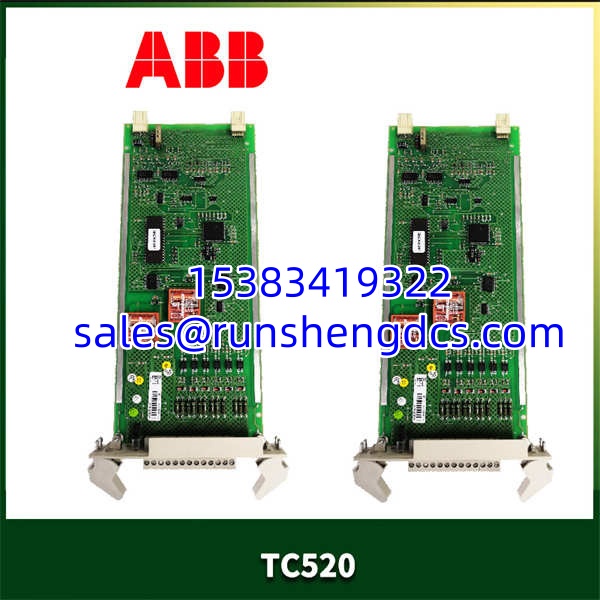
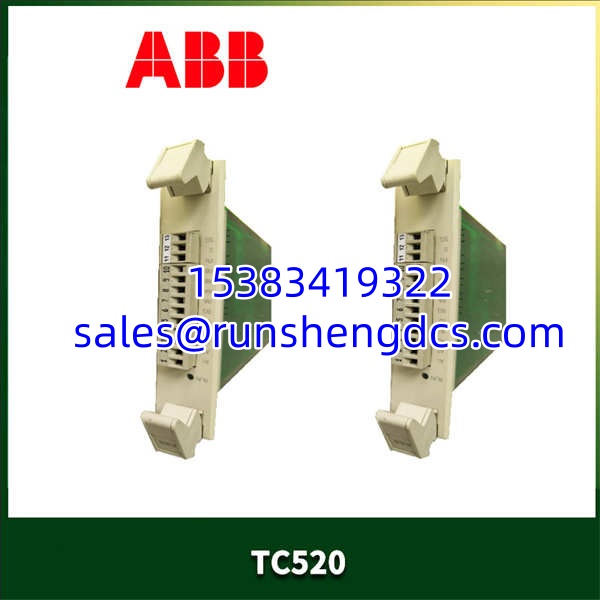

Description
Key Technical Specifications
- Function: Equipment status data acquisition
- Monitored Parameters: Temperature, voltage, current
- Data Transmission: Network integration with central monitoring
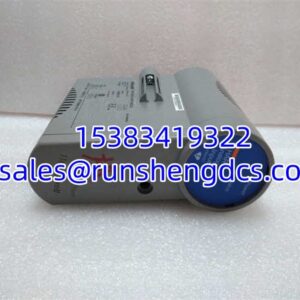
- Dimensions: 279 mm (L) x 153 mm (W) x 27 mm (H)
- Weight: 0.29 kg
- Remote Control: Supports remote monitoring and control
- Reliability: High stability for continuous operation
- Target Industries: Power, petrochemical, metallurgy, paper
Product Introduction
Blind spots in DCS architectures lead to unexpected equipment failures. The TC520 acts as the sensory nervous system for ABB control networks. It continuously polls critical parameters like voltage, current, and temperature, feeding this data directly to the central monitoring station.
This module enables predictive maintenance by catching anomalies before they cause hard faults. It supports remote monitoring, reducing the need for physical panel inspections in hazardous areas. Bottom line — it provides the visibility required to maintain high availability in power and metallurgy applications. Always cross-reference the 3BSE001449R1 suffix to ensure backplane compatibility.
QA/QC Transparency SOP
- Intake & Origin Verification: Validate the 3BSE001449R1 part number against ABB manufacturing records to prevent counterfeit DCS cards from entering the supply chain.
- Live Functional Testing: Connect to a test DCS network. Inject simulated parameter changes and verify real-time data updates on the monitoring station.
- Electrical Parameter Tests: Use a Fluke multimeter to verify internal logic voltages and check for continuity across all network communication pins.
- Firmware/Config Verification: Read the onboard EEPROM via DCS configuration software. Back up any stored calibration or mapping data.
- Final QC & Anti-Static Packaging: Inspect backplane connectors for bent pins. Ship in an ESD-safe bag with protective port covers.
Field Engineer Gotchas
- Network Address Conflicts: The TC520 must have a unique node ID on the DCS network. Duplicate addresses cause silent data drops. I’ve seen a whole substation look offline because of a cloned MAC/Node ID.
- Sensor Wiring Polarity: Analog inputs for current/voltage are polarity sensitive. Reversed wiring feeds negative values to the DCS, triggering false low-voltage alarms. Double-check terminal diagrams.
- Backplane Seating: This is a thin-profile module (27mm). It doesn’t seat with the same tactile click as thicker I/O cards. Push firmly and evenly. Forcing it at an angle bends the backplane pins.
- Ground Loop Noise: Running acquisition cables parallel to VFD motor leads induces noise. The DCS will read phantom voltage spikes. Keep signal cables separated from power conductors by at least 12 inches.
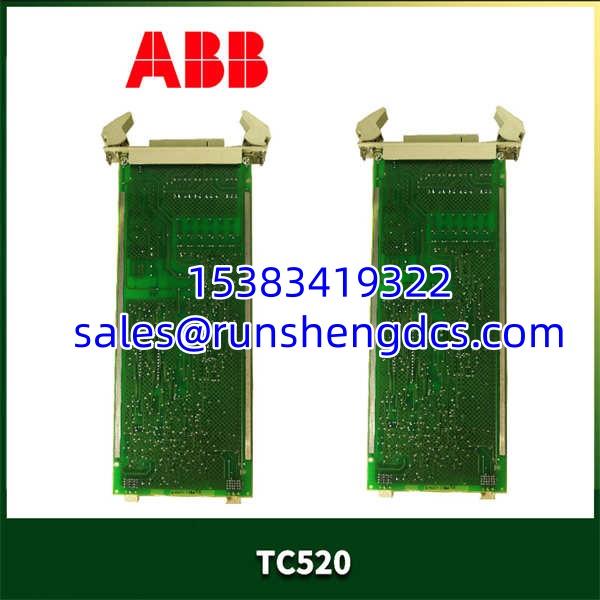
ABB-TC520
Application Scenarios
- Power Generation Turbines: Continuous vibration and temperature monitoring prevents catastrophic bearing failures.
- Petrochemical Distillation Columns: Real-time voltage tracking on heater elements prevents thermal runaway.
- Steel Mill Rolling Lines: Current monitoring on drive motors detects mechanical binding before motor burnout.
- Paper Machine Dryers: Temperature acquisition ensures uniform drying and prevents web breaks.
FAQ
- Is this a PLC or a DCS module? It is a DCS system status acquisition module, not a standalone programmable logic controller.
- Can I hot-swap this card? No. De-energize the DCS backplane slot before installation. DCS modules lack hot-swap protection.
- What protocols does it use? It communicates via proprietary ABB DCS network protocols. Verify compatibility with your specific ABB control system generation.
- Does it support Modbus? Typically no. This is a native DCS acquisition card. Check your system documentation for gateway requirements if Modbus is needed.
- How do I know if it’s failing? Erratic parameter readings, communication timeouts on the DCS console, or complete loss of a monitored equipment group.
- Will a generic replacement work? No. DCS acquisition modules have proprietary calibration and firmware. Stick to genuine ABB 3BSE001449R1 units.