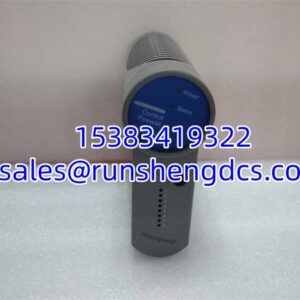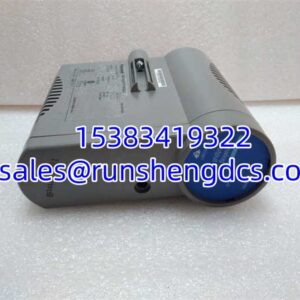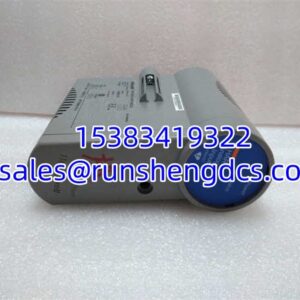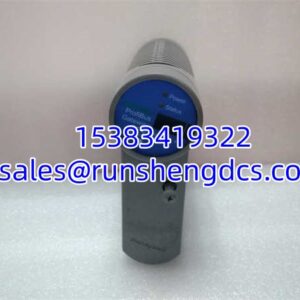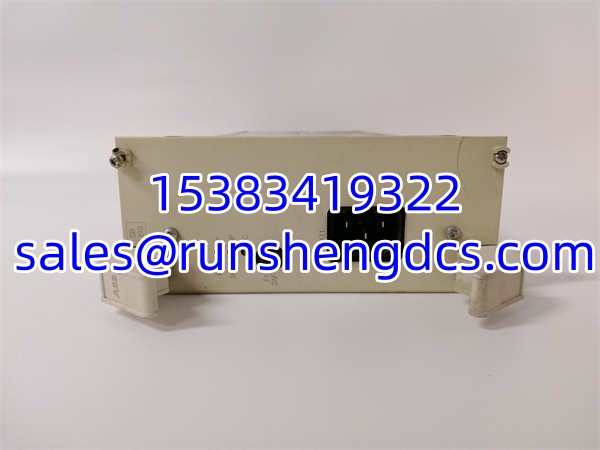

Description
Key Technical Specifications
| Parameter | Specification |
|---|---|
| Product Model | SB510 (3BSE000860R1) |
| Manufacturer | ABB Automation Technologies |
| Input Voltage | 110-230 VAC (47-60Hz) or 110-230 VDC |
| Battery Type | NiCd, 12V, 4 Ah (External/Internal Mount) |
| Switchover Time | < 1 ms (Typical) |
| Protection | Overvoltage, Overcurrent, Short Circuit |
| Dimensions | 60 x 150 x 291 mm (W x H x D) |
| Weight | 0.98 kg |
| Operating Temp | -20°C to +55°C (Verify with OEM) |
| Mounting | DIN Rail / S800 Base Unit |
| RoHS Status | Exempt (2011/65/EU) |
| Origin | Sweden / Poland |
Product Introduction
Power sags don’t always trip the main breaker, but they are enough to corrupt I/O data or reset counters in a high-speed packaging line. The ABB SB510 is the insurance policy for your S800 I/O rack, bridging the gap between a brownout and a full generator start. It’s not just a battery charger; it’s a fast-acting DC-DC converter that keeps the 5V logic rail stable when the 110VAC mains sags or cuts.
We specify the 3BSE000860R1 because it handles the full 110-230VAC/VDC range, making it a universal spare for global sites. The critical spec here is the <1ms switchover time; this is fast enough to hold up electrolytic capacitors in the I/O modules without a reset. Bottom line: it’s designed for control power, not for driving solenoids or motors. Keep the load calculation strict, or you’ll be chasing phantom I/O errors.
QA/QC Transparency SOP
We don’t trust “tested” stickers on power modules. Every SB510 3BSE000860R1 goes through a five-step validation process before it ships:
- Intake & Origin Verification: We trace the 3BSE000860R1 batch code against ABB production records. Visual inspection checks for battery acid corrosion on the terminals and cracked casing from thermal cycling.
- Live Functional Testing: The unit is mounted on a live S800 test rack. We simulate a mains failure by cutting the 230VAC input and verify the 5VDC output stays within tolerance (<5% ripple) during the switchover.
- Electrical Parameter Tests: Using a Fluke 115, we verify the 110-230VAC input tolerance and check the battery charging voltage (10-15VDC range). We also load-test the output to ensure it doesn’t collapse under full spec.
- Firmware/Config Verification: N/A (Analog/Hardware Module). We verify the battery presence detection circuit is functional. If the module thinks the battery is missing when it’s present, it won’t charge.
- Final QC & Anti-Static Packaging: Unit is cleaned, terminals are inspected for pitting, and it’s sealed in an ESD bag. Note: Batteries are often shipped separately due to hazmat regulations.
Field Engineer Gotchas
- Battery Polarity Suicide: The SB510 has no reverse polarity protection on the battery terminals. If you swap the red and black leads during maintenance, you will instantly fry the internal MOSFETs. War Story: Saw a tech connect a new battery backwards at 2 AM. The SB510 popped a capacitor and took out the adjacent DI module via the 5V rail. Always double-check polarity with a multimeter before plugging in the connector.
- Load Calculation Trap: The 3BSE000860R1 is rated for specific current limits. If you have 20 DO modules and 10 AI modules, you might be pulling more than the backup can sustain during a switchover. The SB510 will current-limit and drop the voltage to 4.5V, causing I/O faults. Solution: Calculate your I/O power budget before sizing. Don’t assume “it worked before” means it’s safe now.
- Battery Memory Effect: These use NiCd chemistry. If you constantly float-charge them without periodic discharge cycles, they lose capacity. Warning: The has a battery test function. Run it quarterly. If the test fails, replace the battery. Don’t wait for a real power outage to find out your backup is dead.
- AC/DC Input Confusion: This module accepts both 110-230VAC and 110-230VDC. If you’re feeding it from a 24VDC UPS via a step-up transformer, ensure the ripple is clean. Dirty DC can cause the internal switching regulator to oscillate audibly and overheat.
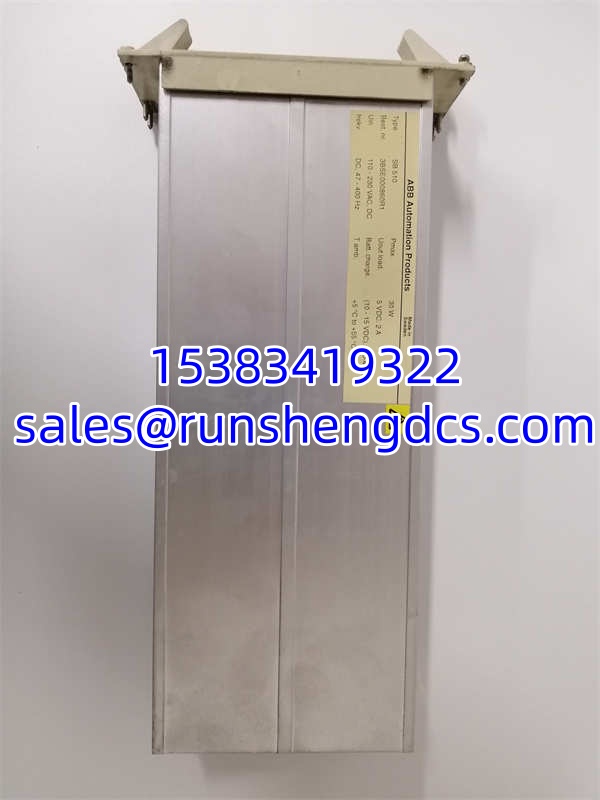
ABB SB510 3BSE000860R1
Application Scenarios
- S800 I/O Redundancy: In critical safety systems, the ensures that if the main PSU fails, the backup CPU and I/O remain powered long enough to execute a safe shutdown sequence.
- Remote Pump Stations: Unmanned sites often have dirty power. The 3BSE000860R1 acts as a line conditioner, filtering out sags and spikes that would otherwise reset the PLC.
- Batch Processing: Prevents “in-flight” batch corruption. If power blips during a recipe step, the holds the memory long enough for the system to log the interruption and pause safely.
FAQ
Can I use a standard 12V lead-acid battery instead of NiCd?
No. The is calibrated for the discharge curve and charging voltage of NiCd cells. Lead-acid batteries have different internal resistance and charging requirements. Using them can cause the charger to overheat or fail to detect a full charge. Stick to the OEM-specified NiCd 12V 4Ah.
Does this support hot-swapping?
Yes, the 3BSE000860R1 supports hot-swap of the battery, but not the module itself while under load. If you need to replace the unit, you must have a redundant PSU or shut down the I/O rack. Swapping the battery is safe; the module switches to main power instantly.
Why is the “Battery Fault” LED on?
Three possibilities: 1) Battery is missing or disconnected. 2) Battery voltage is below the threshold (usually <10V). 3) Battery test failed. *Check:* Measure the battery voltage at the terminals. If it’s >11V and the LED is still on, the internal sense circuit might be faulty. Replace the module.
Can I use this for 24VDC I/O?
No. The outputs only 5VDC logic power. It is designed to power the S800 I/O logic, which internally regulates to 24V if needed, or powers 5V modules directly. Do not connect 24V field devices directly to the output. You will damage them.
What is the switchover time?
Typical switchover is <1ms. This is fast enough to hold up electrolytic capacitors in the I/O modules. However, if your load is near the limit, the voltage dip during switchover might be deeper. Keep a 20% headroom on your load calculation for reliable switchover.
Generally, yes. The form factor and pinout have been stable for decades. However, verify the battery connector type. Some very old units used a different plug. If you’re replacing a 20-year-old unit, bring a photo of the connector.
Do I need to configure this in Control Builder?
No. The is a hardware-only module. It doesn’t appear in the I/O configuration. However, you should configure a battery test schedule in the CPU if you want automated health monitoring. Otherwise, it just works silently until it fails.