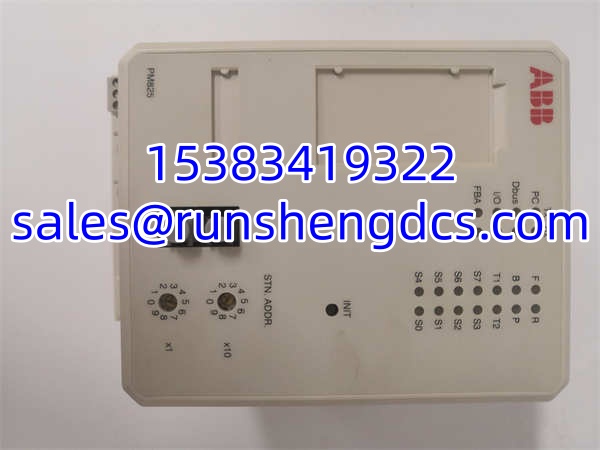

Description
Key Technical Specifications
- Processor: MPC8250 PowerQUICC, 133 MHz clock frequency
- System Memory: 16 MB SDRAM
- Flash Memory: 8 MB Flash
- Battery-Backed RAM: 128 KB (data retention approximately 5 years)
- Input Voltage: 24V DC (operating range: 19.2V – 30V DC)
- Power Consumption: Typical 1.5W, maximum 3.5W
- Ethernet: 1× RJ45 port, 10/100 Mbps auto-negotiation (Modbus TCP, Ethernet/IP)
- Serial Ports: 1× RS-232 (programming/debug), 2× RS-485 (Modbus RTU, up to 1,200 m)
- Fieldbus Support: Profibus DP, DeviceNet (requires expansion modules)
- Backup Battery: Built-in 3.6V lithium cell for clock and critical data retention
- Computing Performance: ~0.5 ms for 1,000 Boolean operations
- Dimensions: 178 mm × 102 mm × 25 mm
- Weight: Approximately 0.5 kg
- Humidity: 5% – 95% non-condensing
- Programming Software: ABB Compact Control Builder
Product Introduction
A process unit trips at 2 AM. The operator console goes red. You trace the fault back to the controller rack — the PM825 CPU module has stopped responding. No heartbeat LED. No communication on the Ethernet port. Every control loop, every interlock, every piece of logic that module was executing just went dark. That is the moment you realize this little 178 mm × 102 mm board is the brain of your entire control node.
The PM825 (3BSE010796R1) is a CPU controller module from ABB’s AC800M family, also associated with the Advant OCS/S100 platform. It runs an MPC8250 PowerQUICC processor at 133 MHz, backed by 16 MB SDRAM and 8 MB Flash. It handles control logic execution, fieldbus communication (Modbus TCP, Ethernet/IP, Modbus RTU, Profibus DP), and I/O supervision — all from a 24V DC supply drawing as little as 1.5W typical. The 128 KB battery-backed RAM holds critical data and clock settings through power interruptions for roughly 5 years. It is a mid-range controller — not the fastest in the AC800M lineup, but proven in chemical, power, water treatment, and manufacturing environments worldwide.
Troubleshooting Quick Reference
| Fault | Likely Cause | Probability | Quick Check | Fix |
|---|---|---|---|---|
| No LEDs lit, module completely dead | Power supply failure or blown fuse | ~60% | Measure 24V DC at module input terminals with multimeter | Check upstream breaker/fuse; verify 19.2–30V range at terminal block |
| Module powered but no Ethernet communication | Failed Ethernet PHY or cable fault | ~50% | Ping module IP; swap Ethernet cable; check link LED | Replace cable; verify IP config matches network segment |
| Control logic stops executing, LEDs frozen | Firmware crash or memory corruption | ~40% | Attempt cold restart via hardware reset button | Reload firmware via Compact Control Builder; replace if crash repeats |
| Battery-backed RAM data lost after power cycle | Depleted backup battery (3.6V Li) | ~35% | Measure battery voltage; check clock retention after power-off | Replace internal lithium battery (requires module removal) |
| Intermittent Profibus/fieldbus drops | Loose expansion module connection or bus termination fault | ~30% | Check fieldbus module seating; verify termination resistors | Reseat expansion modules; check bus cable continuity |
| Module runs hot to touch | Internal component degradation or ventilation blockage | ~20% | Compare surface temp to adjacent modules; check cabinet airflow | Improve ventilation; replace module if temp exceeds 60°C |
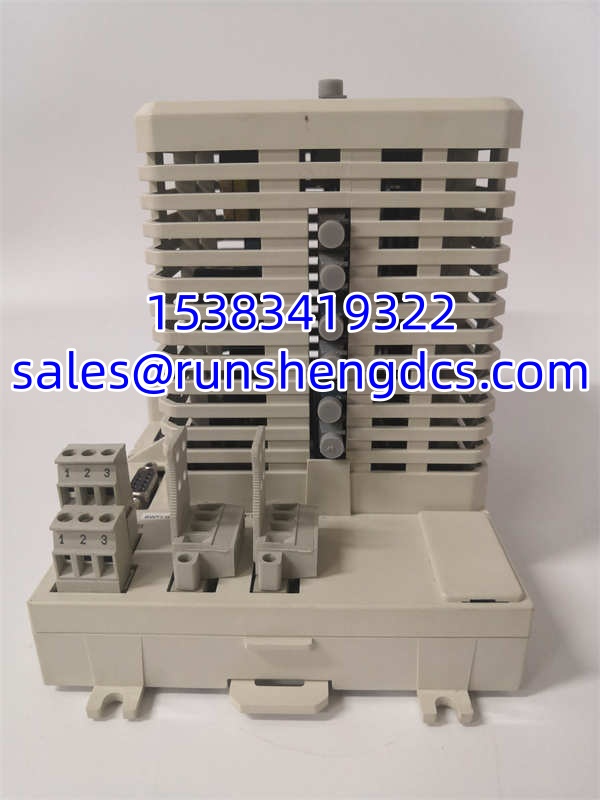
ABB PM825 3BSE010796R1
Application Scenarios & Pain Points
- Chemical batch process control: The PM825 executes recipe-based control logic for reactor temperature, pressure, and feed sequencing. When the CPU hangs, the batch stops mid-process — potentially leaving reactive chemicals in an unstable state until manual intervention restores control.
- Power plant auxiliary systems: Coal and combined-cycle plants use PM825 modules to control boiler feed pumps, condensate systems, and cooling water circuits. A CPU failure means the auxiliary skid goes uncontrolled — and in a power plant, uncontrolled auxiliaries cascade into unit trips fast.
- Water and wastewater treatment: Dosing stations and pump lift stations rely on PM825 controllers for flow-proportional chemical dosing and level-based pump sequencing. A dead CPU means raw sewage flows untreated or chemicals overfeed into the process stream.
- Pulp and paper mill automation: Paper machines use PM825 modules for stock preparation, headbox level control, and dryer section steam pressure regulation. The pain point is firmware compatibility — replacing a failed with a surplus unit requires matching firmware versions, or the existing application program will not load.