Description
Key Technical Specifications
- Processor: 32-bit RISC CPU for real-time signal processing
- Sensor Compatibility: Dual input for ABB PFCL/PFTL/PFRL pressductor sensors
- Excitation Signal: 330 Hz
- Control Accuracy: ±0.5% Full Scale (FS)
- System Response Time: < 10 ms closed-loop
- Power Supply: 24V DC typical (12-48V DC range)
- Communication: Integrated Profibus-DP, Modbus, RS-485
- Analog Output: 0-10V DC / 0-20 mA
- Display: 2×16 character multi-language LCD
- Protection Level: IP20 (IP65 version available as PFEA112-65)
- Operating Temp: -20°C to +50°C
Product Introduction
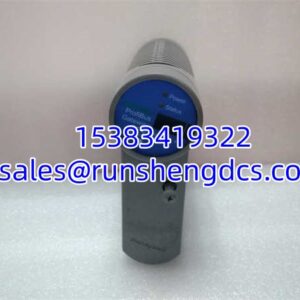
Web tension drift in printing or converting lines usually points to bad sensor data, not a failing motor. The ABB PFEA112-20 (3BSE050091R20) is the brain behind the tension loop. It takes raw, noisy signals from dual pressductor sensors, filters out mechanical vibration, and calculates the exact web tension using a 32-bit RISC processor.
This controller handles the heavy lifting of closed-loop regulation with a sub-10ms response time and ±0.5% full-scale accuracy. It integrates directly into plant networks via Profibus-DP or Modbus, allowing operators to monitor tension and adjust PID parameters from the DCS. Bottom line — it keeps films, foils, and papers running at constant tension without stretching or wrinkling, and replacing a degraded unit restores process stability immediately.
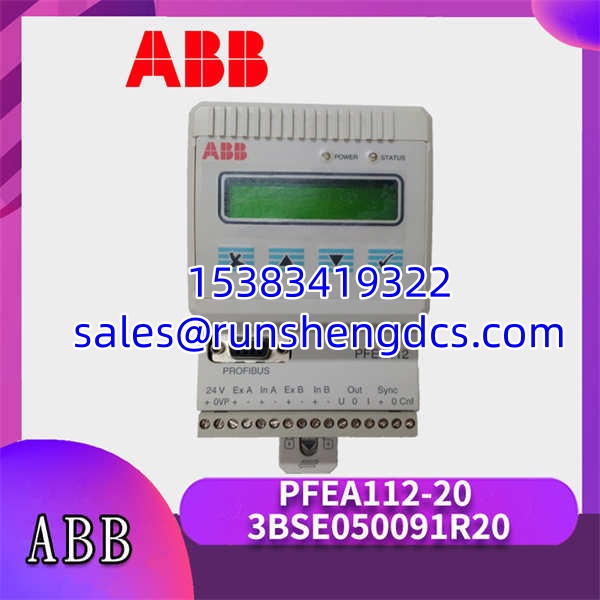
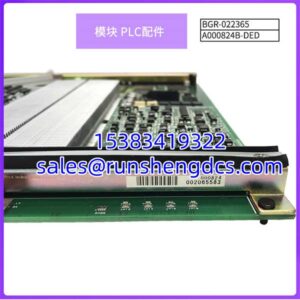
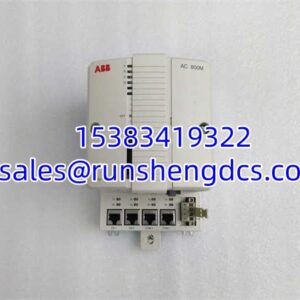
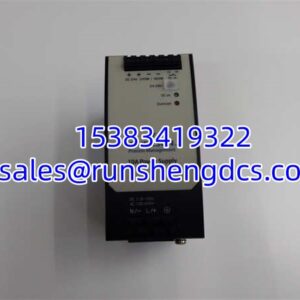
ABB-PFEA112-20-3BSE050091R20
QA/QC Transparency SOP
Tension controllers are precision instruments. Here is how we verify them before shipping:
- Intake & Origin Verification: Inspect PCB for corrosion, verify serial number matches 3BSE050091R20, and check for unauthorized rework on the signal conditioning circuits.
- Live Functional Testing: Mount in a test rack with genuine PFCL sensors. Apply calibrated mechanical load and verify the LCD displays correct tension values within ±0.5% FS.
- Communication Validation: Connect via Profibus-DP and Modbus. Read/write PID parameters and confirm zero packet loss or timeout errors under load.
- Electrical Parameter Tests: Verify 24VDC power draw is under 7.5W. Test analog output linearity from 0-10V using a Fluke multimeter and calibrate signal generator.
- Final QC & Anti-Static Packaging: Clean the LCD and connectors, seal in ESD-safe bag with desiccant, and pack with foam inserts to protect the display during transit.
Field Engineer Gotchas
- Sensor Wiring Polarity: The PFEA112-20 supports polarity checking, but wiring it backward still causes headaches. Warning: I’ve seen techs spend hours troubleshooting “bad sensor” alarms only to find the A/B leads swapped at the terminal block. Always double-check the pinout against the PFCL sensor manual.
- Ground Loops on Signal Cables: These units are sensitive to EMI. Reality check: If your tension reading bounces wildly, check your cable routing. Keep sensor cables at least 30cm away from VFD power lines, and ensure the shield is grounded at the controller end only.
- Calibration Drift: The unit uses a simple two-button calibration (Zero + Span). Lesson learned: Don’t skip the zero calibration after replacing a sensor. If the mechanical load isn’t truly zero when you hit the button, every subsequent reading will be offset. Use the 1200g calibration weight for span verification.
- Profibus Address Conflicts: The DP address is set via DIP switches or software. Caution: If you swap in a replacement unit without checking the address, it will conflict with another node on the bus. Document the DP address and baud rate BEFORE pulling the old controller.
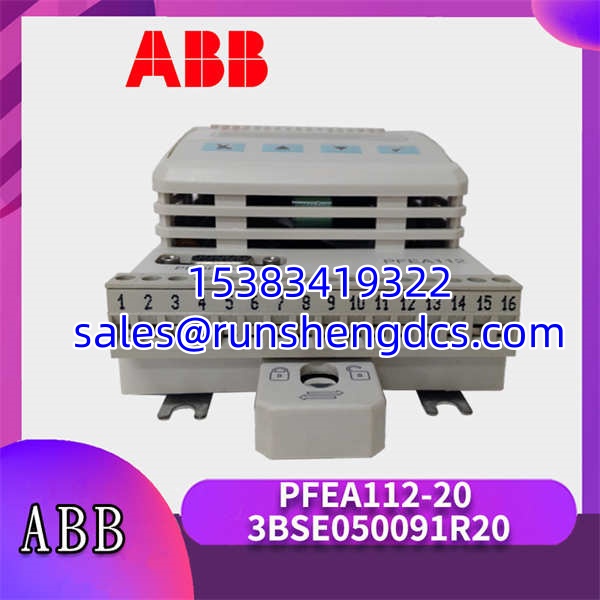
ABB-PFEA112-20-3BSE050091R20
Application Scenarios
- Film & Foil Converting Lines: Maintaining constant tension during high-speed winding prevents telescoping and edge damage. The PFEA112-20’s fast response compensates for motor torque ripple during acceleration.
- Printing Press Registration: Multi-color printing requires precise web tension to maintain register. Dual-sensor input allows the controller to average out local web defects and provide stable feedback to the dancer roll.
- Steel Strip Processing: Cold rolling and slitting lines demand wide-range tension control (up to 280kN with appropriate sensors). The unit’s digital filtering rejects vibration from heavy mill stands.
- Textile Yarn Winding: Consistent yarn tension prevents breaks and ensures uniform package density. The built-in simulation mode lets technicians verify loop tuning before threading live material.
FAQ
Q: Can I use this with non-ABB tension sensors?
A: Not recommended. The PFEA112-20 outputs a 330Hz excitation signal specifically designed for ABB pressductor (PFCL/PFTL) sensors. Third-party load cells won’t work without external signal conditioning.
Q: Does this support Ethernet/IP or EtherCAT?
A: Standard PFEA112-20 has Profibus-DP and Modbus built-in. EtherCAT and CANopen are optional add-on cards. Check the label on your existing unit or specify the communication option when ordering.
Q: My old unit has a cracked LCD but still controls tension. Can I just replace the display?
A: No. The LCD is surface-mounted to the main PCB. Field replacement requires desoldering and risks damaging the signal processing circuits. Replace the entire unit.
A: The PFEA113 supports multi-zone tension control and can coordinate multiple stands. The is a single-zone controller. They are NOT interchangeable — verify your system architecture before ordering.
Q: How do I verify the unit is working before installing it on my line?
A: Use the built-in simulation mode. It generates synthetic sensor signals so you can test PID tuning, communication, and analog outputs without connecting field sensors. Access it through the front panel menu.
Q: Is 3BSE050091R20 the same as 3BSE030369R20?
A: Both are order numbers. They represent different production batches or regional variants but are functionally identical. Verify firmware version compatibility if your system is running older software.