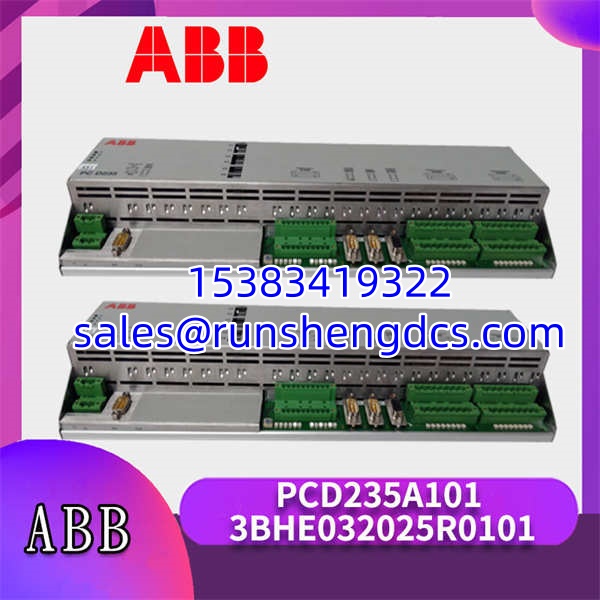
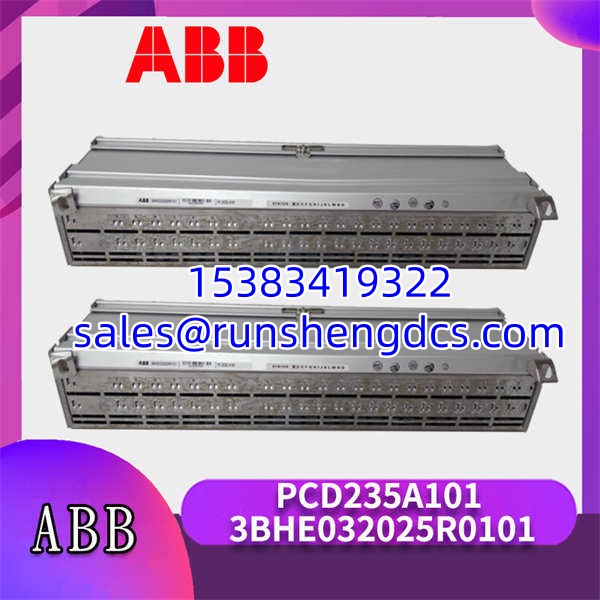

Description
Key Technical Specifications
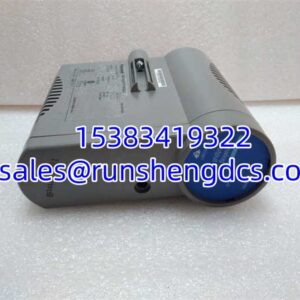
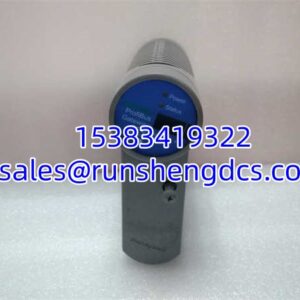
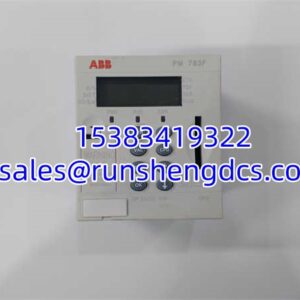
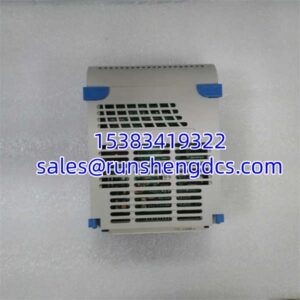
- Product Model: PCD235A101 (3BHE032025R0101)
- Manufacturer: ABB
- Product Category: Main Controller (DCS CPU)
- Processor: High-Performance Industrial 32/64-bit RISC
- Redundancy: Hot Standby (Dual Pair) with ms-level switchover
- Sync Link: Dedicated High-Speed Fiber Optic (e.g., GFD233A)
- I/O Interface: S800 I/O via Backplane Bus
- Communication: Integrated Ethernet (HMI/Eng), Optional Profibus/Modbus
- Hot-Swap: Supported (in redundant config)
- Operating Temp: 0°C to +60°C
- Storage Temp: -40°C to +85°C
Product Introduction
When a DCS loses its brain, the plant doesn’t just stop; it goes blind. The ABB PCD235A101 is the central nervous system for Symphony Plus and AC 800F architectures, handling thousands of control loops, sequence logic, and safety interlocks with deterministic timing. It’s not just a processor; it’s the decision-maker that keeps boilers firing, turbines spinning, and reactors stable when the load swings hard.
Bottom line — this is a mission-critical component, and redundancy is non-negotiable. The ABB PCD235A101 is designed to run in hot-standby pairs, linked by high-speed fiber optics for real-time state synchronization. If the primary fails, the backup takes over in milliseconds with zero process disturbance. It packs a 32/64-bit RISC core and supports hot-swapping, meaning you can pull a faulty unit and slide in a spare without shutting down the rack. Just verify your firmware and fiber link modules match, or you’ll be staring at a “Sync Lost” fault for hours.
QA/QC Transparency SOP
- Intake & Origin Verification: We verify the ABB PCD235A101 order code (3BHE032025R0101) and inspect the PCB for counterfeit markers. DCS CPUs are high-value targets; we check solder quality, component date codes, and BGA integrity against OEM standards.
- Live Functional Testing: The module is mounted on a live AC 800F test rack. We boot the controller, load a test configuration, and verify both Ethernet ports and backplane I/O communication. Redundancy switchover is manually triggered to confirm seamless failover.
- Electrical Parameter Tests: Input current draw is measured under load to ensure it stays within spec. We verify isolation resistance between power and signal paths to prevent ground faults in the field.
- Firmware/Config Verification: We read the firmware version and system ID. The ABB PCD235A101 is factory reset to ensure no residual customer logic or IP conflicts remain.
- Final QC & Anti-Static Packaging: The unit is cleaned, inspected for physical damage, and packed in an ESD-safe bag with protective foam to prevent connector damage during transit.
Field Engineer Gotchas
Firmware/Revision Mismatch:
- Risk: The ABB PCD235A101 has multiple hardware revisions and firmware levels. Mixing revisions in a redundant pair can cause sync failures or boot loops.
- Solution: Always check the full revision string and firmware version on the failed unit. Match it exactly when sourcing a replacement.
- War Story: A plant bought a “” online. It arrived, booted, and immediately faulted because the new unit was Rev C and the system was locked to Rev B. They lost 12 hours downgrading firmware while the unit ran in degraded mode.
Fiber Link Module Compatibility:
- Risk: The redundancy link requires specific fiber modules (e.g., GFD233A). Using the wrong type or a damaged cable will prevent synchronization.
- Solution: Verify the fiber module part number matches your system design. Inspect fiber connectors for dust or scratches; clean with approved optical wipes.
- Blunt Warning: The CPU won’t tell you the fiber is dirty. It’ll just sit there with a red “Sync” LED, and you’ll blame the new CPU. Clean the connectors first.
Backplane Connector Damage:
- Risk: The DIN-style backplane connector on these older boards is fragile. Forcing it into the rack can bend pins, causing intermittent communication or permanent shorts.
- Solution: Align the module perfectly square before inserting. Use even pressure on the top and bottom edges. Never use a hammer or excessive force.
- Reality Check: If it doesn’t slide in smoothly, stop. You’re misaligned. Bent pins on a DCS backplane are a nightmare to repair in a live cabinet.
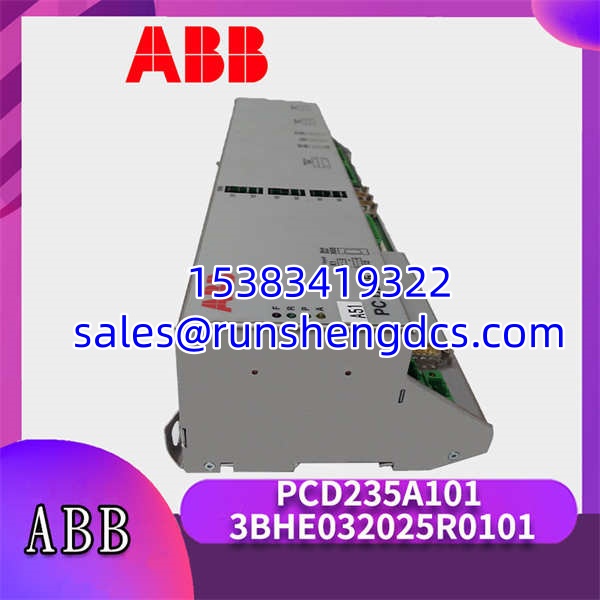
ABB 3BHE032025R0101 PCD235A101
Application Scenarios
Thermal Power Generation:
Boiler-turbine control systems rely on the for coordinated combustion control, feedwater regulation, and turbine speed governing. When this controller fails, the unit can trip offline, costing hundreds of thousands in lost generation.
Nuclear & Hydro Plants:
Safety-critical auxiliary systems use for reactor coolant pump control and gate positioning. The hot-standby redundancy and deterministic scan times are mandatory for regulatory compliance and grid stability.
Petrochemical Refineries:
Distillation columns and catalytic crackers depend on the for precise temperature and pressure control. A controller failure here can lead to unsafe conditions, product loss, or environmental releases.
Case Study:
A coal-fired power plant’s Unit 3 boiler controller failed during a morning ramp. The primary showed a “CPU Fault” and wouldn’t reboot. Maintenance pulled the unit, and it failed bench tests. We shipped a tested replacement with matching Rev B firmware and GFD233A fiber modules. They installed it, verified sync, and the boiler resumed load in 45 minutes. Total cost: 18,000. Cost of a 4-hour outage at peak demand: 1.2 million. The math always favors the spare part.
FAQ
Yes, but only in a redundant configuration. You must ensure the standby unit is fully synchronized before pulling the primary. Never hot-swap a single, non-redundant CPU; you will crash the process.
Can I use a PCD235B101 as a direct replacement?
Generally, no. The PCD235B series is a different generation with different memory architecture and bus protocols. Unless your system documentation explicitly lists cross-compatibility, assume it’s not a drop-in.
If in stock, same-day shipping. Sourcing a specific revision with matching firmware can take 3-7 days. Always specify your required revision and firmware when requesting a quote to avoid return logistics.
Does this module support battery-backed RAM?
Yes. The uses a lithium battery to retain configuration and real-time clock data. If your unit has been sitting on a shelf for years, replace the battery before installation to prevent configuration loss.
How do I verify the module is genuinely ABB?
Check the PCB silkscreen for the ABB logo and the 3BHE… order code. Counterfeits often have blurry printing or incorrect font. We provide a certificate of authenticity with every unit.
What’s the MTBF for this legacy CPU?
ABB doesn’t publish MTBF for discontinued products, but field data suggests 15-20 years for units in climate-controlled environments. Thermal cycling and humidity are the primary killers. Keep your control room at 22°C and 40% RH to maximize lifespan.
Yes. If you can provide a backup file or send us the failed module (if readable), we can load your configuration and test it before shipping. This reduces your commissioning time to zero.