Description
Key Technical Specifications
| Parameter | Value / Note |
|---|---|
| Product Type | Analog Input Board |
| Manufacturer | ABB |
| Model | IBA 940143201 |
| Associated Reference | HIEE205 / UNS3670A-Z (verify on nameplate) |
| Signal Function | Converts analog field signals to digital values for control systems |
| Typical Input Types | Current, voltage, thermocouple, RTD (confirm per board label) |
| Typical Applications | DCS, PLC, process control, power, chemical, metallurgy, paper |
| Documentation Status | No complete OEM datasheet confirmed in public sources |
Product Introduction
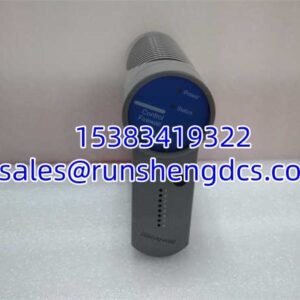
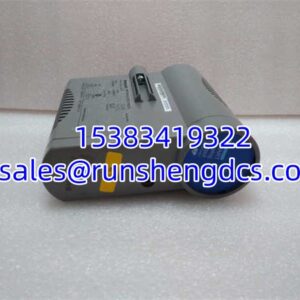
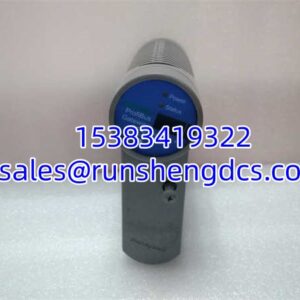
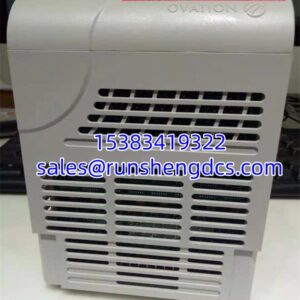
In a DCS or PLC rack, an analog input board is usually blamed only after the loop has already misbehaved. The ABB IBA 940143201 sits in that signal path: it receives analog measurements from field instruments and converts them into digital values that the controller can use for regulation, alarming, and interlocking.
This board is described in public sources as an ABB analog input module used in industrial automation and process control systems. It is commonly referenced alongside ABB control system hardware, including HIEE205 and UNS3670A-Z identifiers. Because this part number appears across surplus and aftermarket listings rather than a single current ABB product page, the safest approach is to treat it as a legacy or system-specific module and verify the exact configuration before deployment.
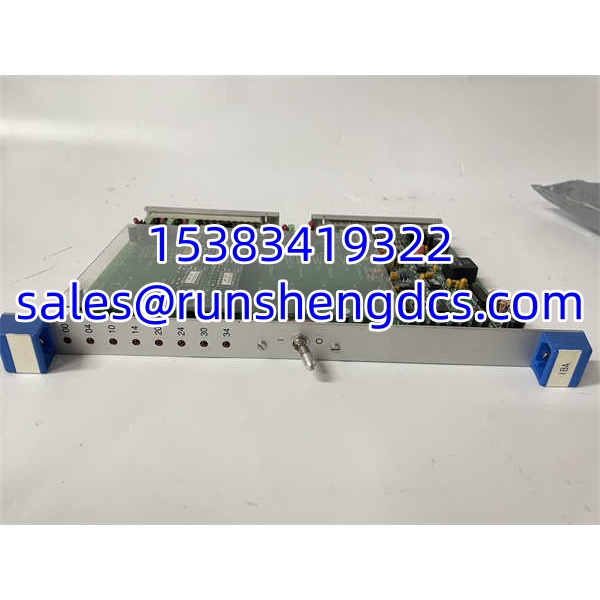
ABB IBA 940143201
QA/QC Transparency SOP
- Nameplate Verification
Confirm ABB branding, IBA 940143201, HIEE205/UNS reference if present, serial number, hardware revision, and rack compatibility markings. Check for burned components, swollen capacitors, corroded terminals, or damaged backplane connectors. - Visual & Mechanical Inspection
Inspect terminal blocks, ribbon cables, board edge connectors, mounting hardware, and LED indicators. Verify that no pins are bent and that the board seats cleanly in its rack slot. - Power-Up & Diagnostics
Install in the correct ABB rack with proper backplane power. Confirm normal LED status, module recognition, and absence of fault codes. Do not force the module into a slot that does not match its mechanical keying. - Channel Functional Test
Apply calibrated current/voltage signals or known thermocouple/RTD simulators where supported. Compare displayed engineering units against the source. Check for channel-to-channel crosstalk, drift, or open-circuit detection. - Final Documentation & Packaging
Record revision, observed channel configuration, test results, and any missing documentation. Pack in anti-static packaging with moisture protection. Label clearly to avoid confusion with other ABB I/O modules.
Field Engineer Gotchas
- Missing OEM datasheet
Risk: Public listings describe this as an analog input board but rarely publish full channel counts, input ranges, or resolution.
Fix: Pull the exact configuration from the nameplate, existing rack documentation, or ABB service literature.
Warning: Do not assume it matches another ABB analog module just because the form factor looks similar. - Wrong HIEE/UNS cross-reference
Risk: Some listings associate 940143201 with HIEE205 or UNS3670A-Z, but suffixes and revisions matter.
Fix: Match the full part code, not just the base number.
Warning: A near-matching HIEE number can fit mechanically but behave differently in the rack. - Signal type mismatch
Risk: The board may support current, voltage, thermocouple, or RTD inputs, but not all channels may be configurable for all types.
Fix: Verify channel wiring, termination, and configuration before applying signals.
Warning: Applying voltage to a current-only input, or vice versa, can produce bad readings or damage the module. - Backplane or slot incompatibility
Risk: ABB racks often enforce slot rules for power, communication, and I/O modules.
Fix: Confirm the allowed slot positions and rack type before installation.
Warning: Forcing a module into the wrong slot can damage the backplane. - Assuming hot-swap capability
Risk: Not all legacy ABB I/O modules support safe hot replacement.
Fix: Follow plant procedures and ABB manuals before removing or inserting the board.
Warning: If the loop is active, isolate the I/O point or place it in a safe state first.
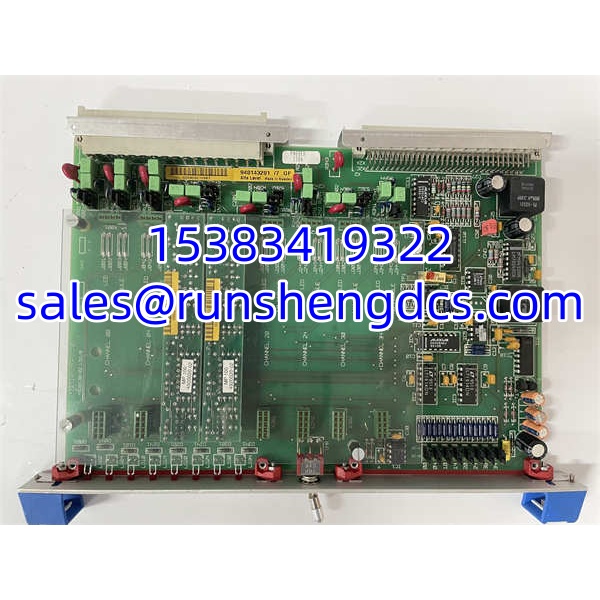
ABB IBA 940143201
Application Scenarios
- Process control loops
Used to acquire temperature, pressure, flow, and level signals for continuous process regulation in chemical, power, and metallurgy plants. - DCS rack replacement
Suitable as a replacement analog input board when the original ABB module fails and the rack architecture matches. - Plant migration or spare pool
Can be retained as a spare for legacy ABB systems where exact module matching is required. - Instrumentation troubleshooting
Useful when isolating whether a bad analog reading comes from the field transmitter, wiring, termination, or the input module itself.
FAQ
What is ABB IBA 940143201?
It is an ABB analog input board used to convert field analog signals into digital values for control systems.
Is it the same as HIEE205 or UNS3670A-Z?
Those references appear in some listings, but they are not automatically interchangeable. Always confirm the full part code on the physical module.
What signals does it accept?
Public descriptions mention current, voltage, thermocouple, and RTD-type inputs, but the exact supported types depend on the board revision.
Can it be used in any ABB rack?
No. It must match the specific ABB rack family, backplane, slot rules, and firmware configuration.
Is it hot-swappable?
Do not assume. Confirm with the ABB manual and plant maintenance procedure before replacing it under power.
Do you provide calibration certificates?
For surplus or refurbished units, request test logs, revision data, and any available calibration records. Do not assume factory calibration is current without documentation.