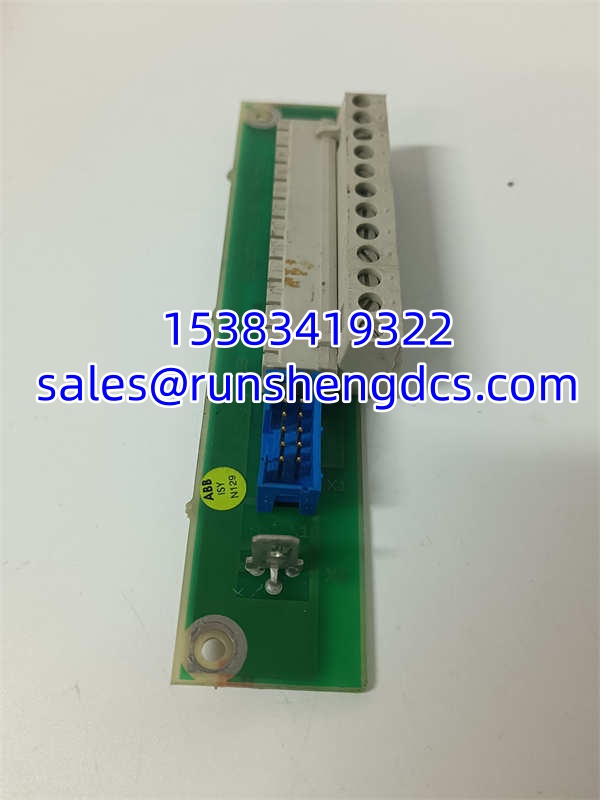

Description
Key Technical Specifications
| Parameter | Specification |
|---|---|
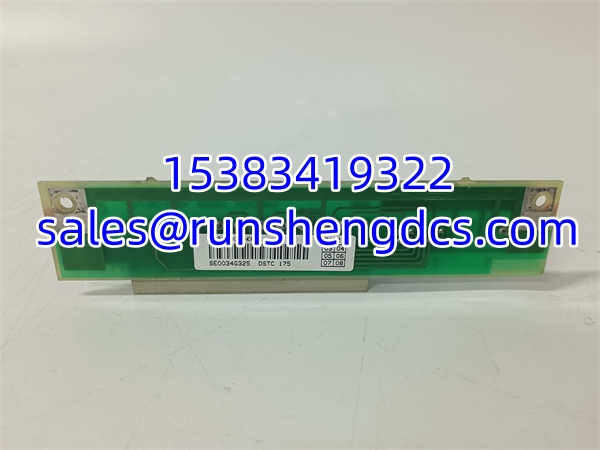
| Model Number | DSTC175 |
| Order Code | 57310001-KN |
| Brand | ABB |
| Product Type | Channel Temperature Module |
| Function | Multi-channel temperature signal acquisition and control |
| Sensor Interface | Digital temperature sensor input (multi-channel) |
| Measurement | High-precision temperature measurement |
| Connection | Direct connection or bus connection supported |
| Configuration | Programmable via DCS configuration interface |
| Mounting | Modular rack/card mount (ABB DCS frames) |
| Design | Modular, high-reliability components |
| Origin | Switzerland (varies by production batch) |
| Reference Price | ~USD 999 – 9,999 (surplus channel; varies significantly by supplier and condition) |
Product Introduction
In process industries — chemical, power, oil and gas, water treatment — temperature is one of the most fundamental and most critical process variables. A single reactor, heat exchanger, or pipeline can have dozens of temperature measurement points that must be monitored continuously and accurately.
The DSTC175 is ABB’s multi-channel temperature acquisition module designed for exactly this scenario. It connects to multiple digital temperature sensors, reads their values with high precision, and feeds the data into the DCS for monitoring, control, and alarming.
Unlike a generic analog input card that requires external signal conditioning for each thermocouple or RTD, the DSTC175 interfaces directly with digital temperature sensors, reducing wiring complexity and improving measurement accuracy. Its flexible connection options — direct wiring or bus-based — allow it to adapt to different system architectures.
The module belongs to ABB’s legacy DCS product family, commonly found in Advant OCS and related process control platforms. It is a workhorse in plants where reliable, high-precision temperature measurement across many channels is essential for process safety and product quality.
QA/QC Transparency SOP
- Intake & Origin Verification
Photograph the module label. Capture the DSTC175 designation, the 57310001-KN order code, serial number, and any ABB manufacturing markings or date codes. Cross-reference against the target DCS system’s configuration documentation to confirm this module matches the required temperature channel assignment. - Visual & Mechanical Inspection
Inspect the PCB for cracked solder joints, corrosion, burnt components, or signs of moisture ingress. Check all sensor connector pins and terminal blocks for bending, oxidation, or contamination. Verify the module slides into the target rack slot without forcing or binding. - Electrical Parameter Tests
Measure insulation resistance on all sensor input terminals. Verify continuity on signal paths. Check for short circuits between channels and ground. Confirm isolation between adjacent channels meets specification. - Functional Verification
If test infrastructure permits, connect known temperature sensors (or simulated digital temperature sources) to each channel. Verify that the module reads and reports temperature values with correct precision. Confirm all channels respond independently and that no cross-channel interference is present. Verify bus communication if bus connection mode is used. - Final QC & Anti-Static Packaging
Label with QC pass status, test date, and any revision markings. Pack in an anti-static shielding bag with foam protection on all connectors. Include documentation noting that sensor type and channel assignment must be verified against the DCS configuration before commissioning.
Field Engineer Gotchas
- Sensor Type Must Match the Module Interface
The DSTC175 is designed for digital temperature sensors. If the existing field instrumentation uses analog thermocouples or RTDs without digital transmitters, this module is not the correct choice. Verify the sensor type and communication protocol before specifying the DSTC175. - Channel Assignment Must Be Configured in DCS
Each channel on the must be explicitly configured in the DCS for the correct sensor type, measurement range, and engineering units. A surplus module pulled from one application will not work correctly in another without reconfiguration. - Bus vs. Direct Connection Is Not Interchangeable
The module supports both direct and bus connection modes, but the wiring and configuration differ significantly between the two. Confirm which connection mode the target system requires before installation. - High Precision Requires Proper Sensor Calibration
The provides high-precision measurement, but the overall accuracy depends on the entire measurement chain — sensor accuracy, wiring quality, and DCS scaling. A perfectly functioning module cannot compensate for a poorly calibrated sensor. - Not a Controller — It Is a Measurement Module
The acquires and reports temperature data. It does not execute control algorithms on its own. Temperature control loops (PID, cascade, etc.) must be configured in the DCS controller, not on this module.
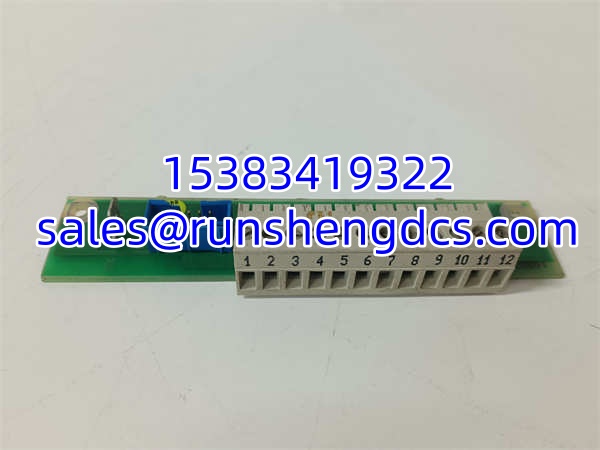
ABB DSTC175 57310001-KN
Application Scenarios
- Chemical reactor temperature monitoring — Multiple thermocouples or digital temperature sensors distributed across a reactor vessel feed into the , providing real-time temperature profiles for safety interlocks and process optimization.
- Heat exchanger monitoring — Inlet and outlet temperature measurements on both the hot and cold sides of a heat exchanger are acquired through the , enabling efficiency calculations and fouling detection.
- Power plant boiler systems — Steam temperature, feedwater temperature, and flue gas temperature measurements across multiple points are consolidated through the into the DCS for combustion control and efficiency monitoring.
- Legacy DCS temperature system upgrades — In older ABB DCS installations where temperature measurement capacity is insufficient, the adds multi-channel digital temperature acquisition without requiring a full system overhaul.
FAQ
The is designed for digital temperature sensors. Verify the specific sensor type, communication protocol, and signal format against the module’s documentation before procurement.
The is a multi-channel module. The exact number of channels depends on the specific hardware revision and configuration. Confirm the channel count against the module’s documentation or physical labeling.
Yes. Each channel must be configured in the DCS for the correct sensor type, measurement range, engineering units, and connection mode (direct or bus). A surplus module pulled from one application will not work correctly in another without reconfiguration.
Not directly. The interfaces with digital temperature sensors. If your field instruments output analog signals (mV, resistance), you will need either analog-to-digital transmitters or a different module designed for analog temperature inputs.
Is this module still supported by ABB?
Verify directly with ABB. The belongs to ABB’s legacy DCS product family. Confirm current support status, spare parts availability, and any recommended replacement before specifying it for a new installation.
What is the typical lead time for surplus units?
Surplus availability varies. Some suppliers list delivery in approximately 2–5 days. Confirm stock status with the supplier before committing to a project timeline.