Description
Key Technical Specifications
| Parameter | Specification |
|---|---|
| Product Type | Serial communication interface module |
| Model | DSSB140 |
| Order Code | 48980001-P |
| Controller Platform | ABB AC 800M |
| Serial Channels | 2× independent, electrically isolated |
| Interface Standards | RS-485 / RS-422 (software-selectable) |
| Max Baud Rate | 115.2 kbps |
| Data Format | 5–8 data bits, 1–2 stop bits, odd/even/no parity |
| Isolation | ≥500 VRMS (channel-to-channel and channel-to-backplane) |
| Supply Voltage | 24VDC ±10% |
| Operating Temperature | 0°C to +60°C (extended range: -20°C to +60°C) |
| Protection Class | IP20 (IP65 available upon request) |
Product Introduction
Serial comm modules in AC 800M racks tend to get overlooked until something breaks. The DSSB140 (48980001-P) is not a bolt-on protocol converter sitting in a separate enclosure — it is a native I/O module that plugs directly into the AC 800M backplane. Serial data from RS-485 or RS-422 field devices enters the controller logic deterministically, meaning the CPU sees it as part of its own I/O scan rather than chasing an external gateway.
Two independent channels give you the ability to run separate serial networks from a single module. The ≥500 VRMS isolation between channels and between each channel and the backplane keeps ground loops and surge transients from corrupting your data or frying adjacent cards. Baud rates go up to 115.2 kbps with configurable data bits, stop bits, and parity — enough flexibility to talk to most legacy serial instruments without external converters. Bottom line — if your AC 800M system needs native serial I/O, this is the board that does it.
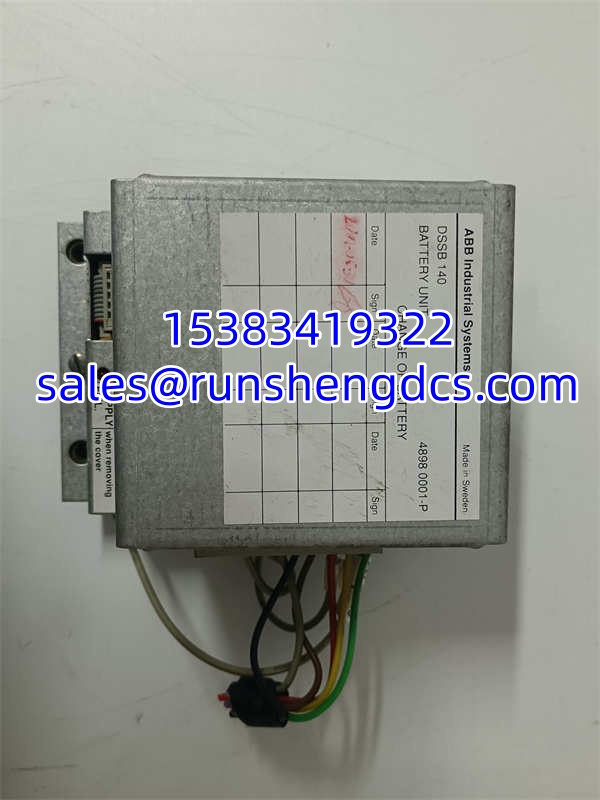
ABB DSSB140 48980001-P
QA/QC Transparency SOP
Here is how surplus DSSB140 stock should be checked before it goes into a live cabinet:
- Intake & Origin Verification — Confirm the PCB label reads DSSB140 with order code 48980001-P. Check ABB part markings, date codes, and any revision stamps. Inspect the backplane connector pins for bending, corrosion, or missing guide rails.
- Live Functional Testing — Mount the module in a test rack with a known-good AC 800M CPU. Power with a regulated 24VDC supply. Establish communication with the CPU and verify the module is recognized in the hardware configuration. Send and receive data on both RS-485/RS-422 channels using a serial terminal or test tool.
- Electrical Parameter Tests — Measure supply current draw against the published specification. Run an insulation resistance test (megger) between channels and between each channel and the backplane ground to confirm the ≥500 VRMS isolation barrier is intact. Check continuity on all signal and ground pins.
- Firmware/Config Verification — Read the module firmware revision through the controller. Back up any stored configuration parameters. Confirm the revision matches the target system’s hardware configuration file.
- Final QC & Anti-Static Packaging — Clear test configurations. Package in anti-static shielding with foam protection for the backplane connector and serial terminal blocks. Include a test report documenting channel communication results, isolation test values, and firmware revision.
Field Engineer Gotchas
- RS-485 vs RS-422 Selection — The interface standard is software-selectable, not hardware-switched. If your configuration says RS-485 but your field wiring is terminated for RS-422 (or vice versa), you will get intermittent comm failures or no communication at all. Check the software configuration first before blaming the wiring. One site spent a full shift replacing cables before someone opened the hardware config and found the wrong protocol selected.
- Termination Resistors on RS-485 — RS-485 networks need proper termination at both ends of the bus. Missing termination resistors cause signal reflections that look like random data corruption. If your serial comm is dropping packets, check for 120Ω termination at the first and last nodes.
- Isolation Grounding — The 500 VRMS isolation is real, but it only works if you do not defeat it with improper grounding. Do not tie the isolated channel ground to cabinet earth at multiple points. That creates a ground loop that bypasses the isolation barrier entirely.
- 24VDC Supply Quality — The module requires 24VDC ±10%. If your cabinet power supply is noisy or drooping under load, the module may brown out during high-current serial transmissions. Measure the voltage at the module terminals under actual operating conditions, not just at the power supply output.
- Backplane Slot Assignment — The DSSB140 must be assigned to the correct slot in the AC 800M hardware configuration. Plugging it into a physical slot that does not match the software configuration will cause the CPU to flag a hardware mismatch fault. Verify slot assignment in the configuration tool before powering up.
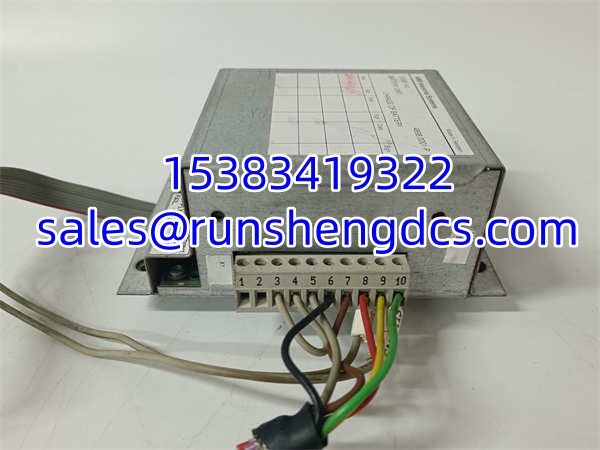
ABB DSSB140 48980001-P
Application Scenarios
- Legacy Modbus RTU Instrument Integration — An AC 800M controller needs to poll temperature and pressure transmitters on an existing Modbus RTU serial network. The DSSB140 provides the RS-485 physical layer directly in the rack, eliminating the need for an external serial-to-Ethernet gateway.
- Multi-Drop Serial Networks in Water Treatment — A water treatment plant runs multiple dosing pump controllers on separate RS-485 segments. The two isolated channels on the allow each segment to operate independently without ground loop interference between them.
- Remote I/O Expansion via RS-422 — A process area uses RS-422 point-to-point links to reach remote I/O panels located up to 1200 meters from the control cabinet. The ‘s RS-422 mode supports the longer cable runs with differential signaling.
Field Case (Anonymized): A chemical plant upgraded from an older ABB controller to AC 800M and needed to retain communication with 12 existing Modbus RTU analyzers on a shared RS-485 bus. The original plan called for an external serial gateway, but the project engineer specified the instead. The module plugged directly into the AC 800M rack, the RS-485 channel was configured for 9600 baud with 8N1, and all 12 analyzers came online within the first hour. The isolation barrier prevented a ground fault on one analyzer from taking down the entire serial bus — something that had plagued the old system for years.
FAQ
It is designed for the AC 800M platform, but firmware compatibility varies by CPU firmware version. Check the ABB hardware compatibility list or your system integrator’s documentation before ordering. A module that works on one CPU rev may not be recognized by an older CPU without a firmware update.
Can I use this module for Modbus RTU communication?
Yes. The RS-485 channel supports Modbus RTU as a physical layer. The AC 800M CPU handles the Modbus master or slave protocol in software. The provides the serial interface.
What is the maximum cable length for RS-485?
RS-485 supports up to 1200 meters under ideal conditions with proper cable, termination, and low baud rates. At 115.2 kbps, practical cable length drops significantly. Keep runs short at high baud rates.
Does this module need external power?
It draws power from the AC 800M backplane. The 24VDC specification refers to the backplane supply voltage requirement. Verify that your power supply unit can handle the additional current draw of this module.
Can I hot-swap this module in a live system?
No. The AC 800M backplane does not support hot-swapping of I/O modules. Power down the rack before inserting or removing the .
Yes. is the type designation. 48980001-P is the full order/material number. Both refer to the same module.
What happens if I connect RS-422 wiring to a channel configured for RS-485?
You will likely get communication errors or no data at all. RS-422 uses four wires (two differential pairs), while RS-485 uses two wires (one differential pair). The physical wiring and the software configuration must match.