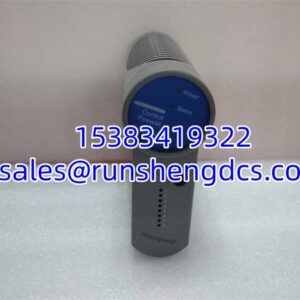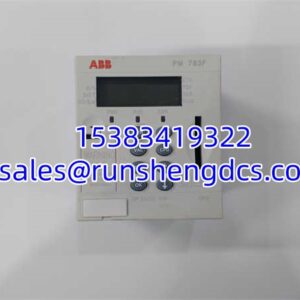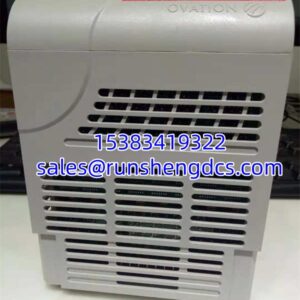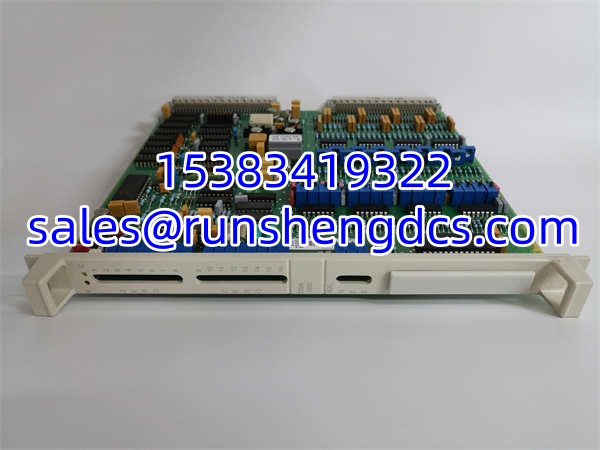

Description
Key Technical Specifications
| Parameter | Specification |
|---|---|
| Product Model | DSAI130D 3BSE003127R1 |
| Manufacturer | ABB |
| Product Type | Analog Input Module |
| Input Channels | 16 Independent Channels |
| Input Range | ±10V DC, ±10mA |
| Resolution | 12-Bit |
| Accuracy | 0.03% |
| Conversion Time | 20ms |
| Power Supply | 24VDC |
| Operating Temp | -20°C to +70°C |
| Interface | RJ45 |
Product Introduction
I’ve pulled more DSAI130D 3BSE003127R1 boards out of Advant Master racks than I care to count, usually because someone ignored the filtering config or let a 4-20mA loop go bad. This is a 16-channel analog input module that takes temperature, pressure, and flow signals from the field and digitizes them for the controller. It’s the eyes of the DCS; when it drifts, your operators are flying blind.
The real reason engineers hunt down this specific DSAI130D 3BSE003127R1 is the 12-bit resolution with 0.03% accuracy; it’s tight enough for most process control loops without needing the cost of a 16-bit board. Just be warned: these boards are 20+ years old. The internal reference voltage can drift, and the input protection diodes get tired. If you’re buying surplus, test every channel before trusting it with a critical alarm setpoint.
QA/QC Transparency SOP
Legacy analog modules are the most common source of “ghost” process upsets. Every DSAI130D 3BSE003127R1 undergoes a strict validation protocol:
- Intake & Origin Verification: We verify the 3BSE003127R1 order code against ABB’s historical manufacturing records and inspect the RJ45 connector for bent pins or corrosion.
- Live Functional Testing: The module is installed in a live Advant Master test rack. We inject a calibrated 4-20mA signal and verify all 16 channels read within 0.03% of span.
- Electrical Parameter Tests: Using a Fluke 115, we verify the 24VDC input regulation and check for excessive current draw that would indicate failing internal components.
- Firmware/Config Verification: We read the onboard firmware revision and compare it against the customer’s existing system version to prevent compatibility issues.
- Final QC & Anti-Static Packaging: The module is cleaned, the RJ45 port is inspected, and it’s sealed in an anti-static bag with a printed test report detailing the exact channel accuracy.
Field Engineer Gotchas
- Filter Configuration Mismatch: The DSAI130D 3BSE003127R1 has 4 sets of configurable filtering times. War story: Swapped a board and didn’t match the filter settings, introduced lag into a fast control loop, and spent three hours chasing a “process upset” that was actually just bad configuration. Always copy the filter settings from the old board.
- DIP Switch/Jumper Errors: This module often requires physical jumper settings to define its bus address or channel grouping. Warning: If you pull the old board without photographing the jumpers, you will install the new one incorrectly and isolate yourself from the DCS. I’ve seen panels where someone guessed the address and spent a day debugging.
- Wiring/Terminal Block Incompatibilities: The RJ45 interface requires specific pinouts for analog signals. Verify the wiring diagram for the specific 3BSE003127R1 variant. A direct “plug-and-play” assumption has caused miswired inputs in the field.
- ESD Risks: The internal ADC processors are highly sensitive to electrostatic discharge. Always use a grounded wrist strap. I’ve seen technicians ruin perfectly good boards just by sliding them across a nylon bag.
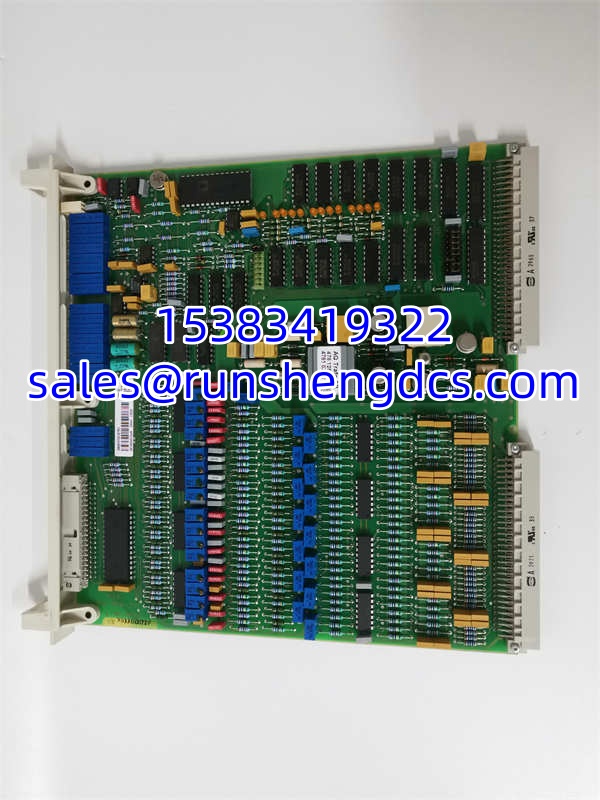
ABB DSAI130D 3BSE003127R1
Application Scenarios
- Legacy Power Plant DCS: Acquiring temperature and pressure signals from boiler feedwater systems in 30-year-old power generation facilities where a full system migration is not yet budgeted.
- Pulp & Paper Mill Control: Monitoring flow and level signals in digesters and paper machines using the original Advant Master hardware.
- Industrial Process Zones: Serving as the local analog input brain for chemical dosing, mixing, and temperature control in manufacturing plants with 20+ year old DCS.
- Real-World Case Study: A power plant experienced a catastrophic analog input failure during a summer peak load. The original board was obsolete. We sourced a tested DSAI130D 3BSE003127R1. After verifying the DIP switch settings and matching the filter configuration, the module was installed. The unit was back online within the planned outage window, avoiding an estimated $100,000/day in lost generation revenue.
FAQ
Can I use this for thermocouple inputs directly?
No. The is a voltage/current input module. If you need thermocouple inputs, you need a DSAI130T or add external signal conditioners. Wiring a TC directly will give you garbage readings.
Why is my reading noisy?
Check the filter configuration first. The has selectable cutoff frequencies (10Hz, 30Hz, 100Hz, 300Hz). If you’re in a noisy environment with VFDs nearby, you need the 10Hz or 30Hz filter. Also, check your shield grounding; a floating shield is an antenna.
Is this module hot-swappable?
No. Advant Master analog modules are not hot-swappable. Pulling a live can cause a bus error or upset the controller. Plan a maintenance window. It’s not worth crashing the unit to save 5 minutes.
What’s the max input voltage?
±10V DC. If you exceed this, you’ll fry the input protection. If your field signal can spike above 10V, add external clamping diodes. I’ve seen too many boards killed by a 24VDC power supply fault.
Do I need to configure this in the DCS?
Yes. You must add the to the Advant Master hardware tree, set the channel ranges, and configure the filtering. If the software config doesn’t match the physical DIP switches, the module will sit there with a fault light, mocking you.
Can I repair the RJ45 connector?
You can, but don’t. The PCB traces are fragile. If the connector is loose or corroded, replace the module. A bad connector on an analog input is a ticking time bomb for process data.