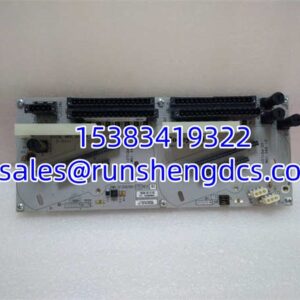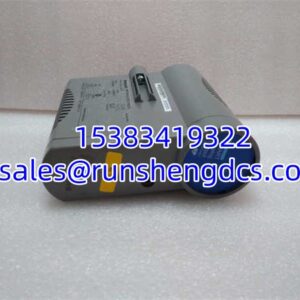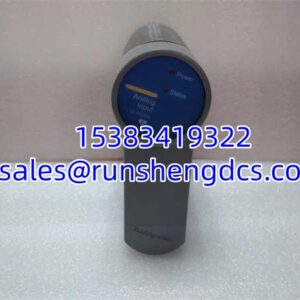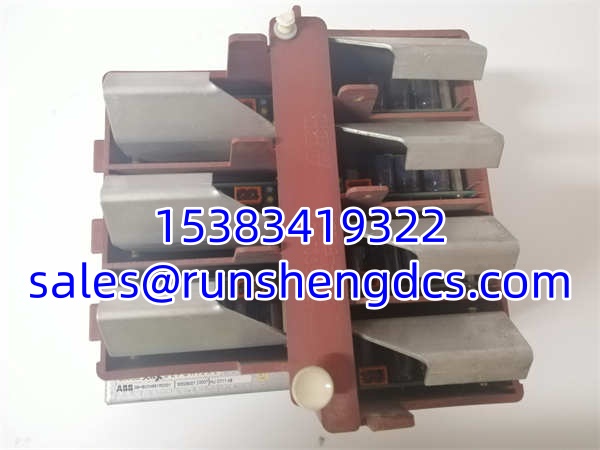
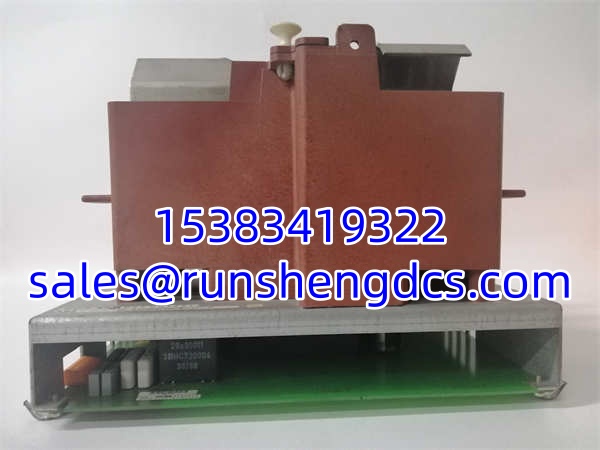

Description
Key Technical Specifications
- Product Model: ABB 3BHB004661R0001 KUC711AE
- Manufacturer: ABB
- Product Type: FPGA Control Module
- Core Technology: Field-Programmable Gate Array (FPGA)
- Key Feature: Partial Reconfiguration (Dynamic/Static)
- System Compatibility: AC800M Controller / 800xA
- Design Flow: Modular Hardware Description
- Update Capability: Hot-swap sub-components while running
- Application: Real-time Logic, Encryption, Signal Processing
- Mounting: Standard AC800M Rack / Backplane
- Configuration: Hardware-mapped boundaries
Product Introduction
Most control modules are static bricks; you flash them, they run, and if you need a logic change, you stop the line. The ABB 3BHB004661R0001 KUC711AE isn’t static. It’s an FPGA-based control module built for partial reconfiguration, meaning you can swap out a specific logic block—like an encryption core or a new PID algorithm—while the rest of the controller keeps running. In a world where uptime is revenue, this isn’t a luxury; it’s a survival mechanism.
Bottom line — it’s a programmable logic engine, not just a relay. The ABB 3BHB004661R0001 KUC711AE uses a specialized software flow to map design modules to explicit hardware boundaries. This allows for “Dynamic Partial Reconfiguration,” where critical I/O stays live while the backend logic updates. If you’re running complex AC800M systems in power generation or marine, this module lets you patch vulnerabilities or optimize performance without a weekend shutdown. Just verify your controller firmware supports the partial reconfig bitstream; older versions won’t talk to this card.
QA/QC Transparency SOP
FPGA modules are sensitive to more than just voltage; they’re sensitive to configuration integrity. Every ABB 3BHB004661R0001 KUC711AE gets:
- Intake & Origin Verification: We check the date code and inspect the BGA/CSP packages for rework. FPGA packages are expensive; we ensure no one tried to “reball” a failed chip.
- Live Functional Testing: Racked in an AC800M test cell, we load a known-good partial reconfig bitstream. We verify the “static” region stays active while the “dynamic” region reloads. No glitches allowed.
- Electrical Parameter Tests: Using a Fluke 115, we verify the 3.3V/1.2V core rails. FPGA core voltage ripple must be <30mV; anything higher causes silent data corruption.
- Firmware/Config Verification: We read the EEPROM to confirm the module ID matches ABB 3BHB004661R0001 KUC711AE and check for any latched configuration errors from previous deployments.
- Final QC & Anti-Static Packaging: Sealed in ESD-safe bags with desiccant. FPGA pins are sensitive; we use protective caps on the backplane connector to prevent bending during shipping.
Field Engineer Gotchas
- Partial Reconfig Boundaries: You can’t just recompile anywhere. The ABB 3BHB004661R0001 KUC711AE requires explicit “floorplanning” in your HDL tool. If your logic spills over the defined boundary, the partial update will corrupt the static region and crash the controller. I’ve seen a “simple update” brick a $20k controller because the engineer ignored the placement constraints.
- Clock Domain Crossing: When swapping logic blocks, clock domains must be synchronized. If your new module uses a different clock phase without proper synchronizers, you’ll get metastability failures that are impossible to debug. Verify your CDC constraints before flashing the .
- Power Sequencing: FPGAs have strict power-up sequences. If your backplane power is noisy or ramps slowly, the might latch up or fail to configure. Measure the 3.3V rail rise time; it needs to be 1ms–50ms. Too slow, and the config chain times out.
- Thermal Throttling: Partial reconfiguration generates heat spikes. If your panel cooling is marginal, the might throttle during the update, causing a config failure. Ensure airflow is >2 m/s across the module during maintenance windows.
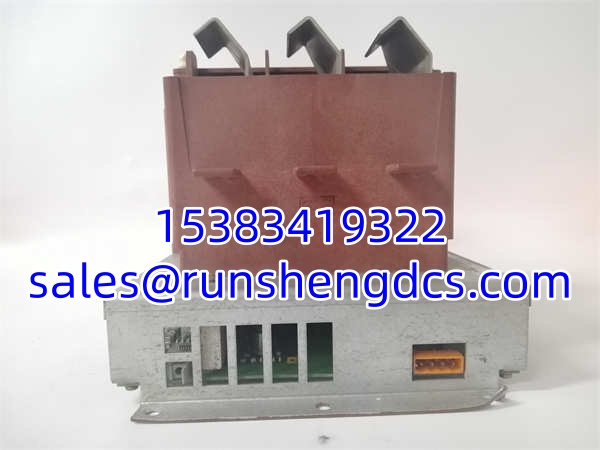
ABB 3BHB004661R0001 KUC711AE
Application Scenarios
- Grid Protection Systems: Where encryption standards change every few years, the allows utilities to swap crypto cores without de-energizing the substation, maintaining NERC-CIP compliance during live operations.
- Marine Propulsion Control: In dynamic positioning systems, the enables real-time tuning of thruster algorithms while the vessel is on-station, avoiding costly drift-offs during updates.
- High-Speed Manufacturing: For packaging lines with frequent product changeovers, the loads custom motion profiles on-the-fly, reducing changeover time from hours to seconds.
FAQ
Is this the same as the KUC711AE01 3BHB004661R0101?
No. The suffix matters. The is a specific hardware/firmware revision. The R0101 variant might have different FPGA density or I/O mapping. Always match the full 3BHB004661Rxxxx code; partial reconfig boundaries are not backward compatible.
Can I use standard PLC logic on this FPGA module?
No. The requires HDL (VHDL/Verilog) or high-level synthesis tools, not ladder logic. It’s for custom hardware acceleration, not standard I/O scanning. If you just need relays, buy a DI/DO card.
What happens if the partial reconfig fails mid-update?
The has a “golden image” fallback. If the new bitstream fails CRC or config validation, it automatically reverts to the last known good static image. You won’t lose control, but you will get a “Config Fault” alarm. Check your event log immediately.
Is this module hot-swappable physically?
No. The is not a hot-swap I/O card. You must power down the rack to replace it. “Partial reconfiguration” refers to logic updates, not physical card replacement. Pulling it live will arc the backplane.
Why is my module stuck in “Configuring” state?
Check the clock. The needs a stable reference clock to start the config chain. If your backplane clock is jittery or missing, the FPGA will hang. Verify the CLK LED is solid green, not blinking.
Can I repair a corrupted FPGA?
No. The is a sealed, programmed device. You can’t “re-flash” a physically damaged FPGA. If the config port is fried or the silicon is cracked, it’s scrap. Buy a verified surplus unit; board-level FPGA repair is a myth.