Description
Key Technical Specifications
| Parameter | Specification |
|---|---|
| Product Type | DC discrete output module |
| Platform | Modicon Quantum |
| Number of Outputs | 16 |
| Output Voltage | 10–60 V DC |
| Output Logic | Negative logic / sink |
| Output Grouping | 2 groups of 8 |
| Max Output Current | 2 A per point |
| Max Group Current | 6 A per group |
| Address Requirement | 1 output word |
| Bus Current Demand | 160 mA |
| Channel-to-Bus Isolation | 2500 Vrms DC, 1 minute |
| Group-to-Group Isolation | 700 Vrms DC, 1 minute |
| Internal Protection | 8 A fuse per group, 2 A per point |
| Operating Temperature | 0–60 °C |
| Storage Temperature | -40–85 °C |
| Relative Humidity | Up to 95%, non-condensing |
| Operating Altitude | ≤ 5000 m |
| Weight | 0.45 kg |
| Local Indication | 16 green output status LEDs, 1 red external fault LED, 1 green bus activity LED |
| Certifications / Standards | CE, CSA C22.2 No. 142, UL 508, FM, C-Tick |
Product Introduction
When a Quantum output card fails, the symptom is rarely subtle: a valve will not open, a relay will not pull in, a solenoid will not fire, or the PLC shows output faults while the field device stays dead. The Schneider 140DDO84300 sits in that exact part of the control architecture. It converts PLC logic states into 16 DC discrete outputs, making it a workhorse module for on/off control of relays, contactors, solenoid valves, motor starters, alarms, and similar actuators.
Its practical value comes from the combination of 16 points, 10–60 V DC output range, 2 A per point, and 6 A per group, with isolation between groups and between channels and the bus. That makes it suitable for mixed DC load groups, but it also means installers must check the actual load voltage, current draw, inductive protection, and group current limits. It is not a universal “any DC output” card — group loading and sink logic still matter.
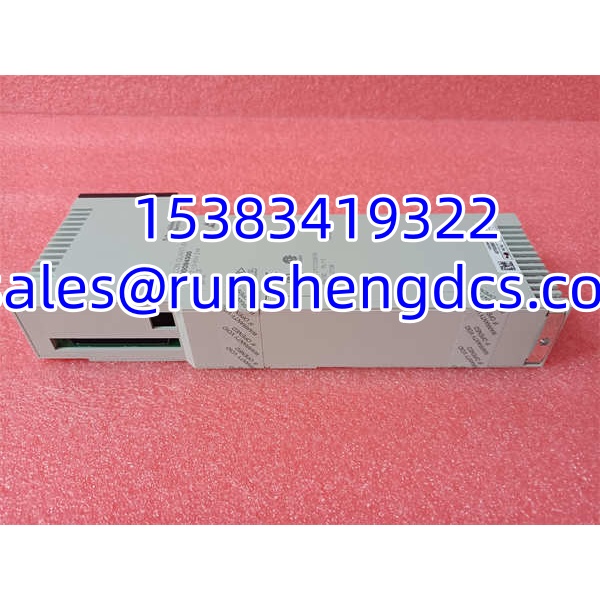
Schneider 140DDO84300
QA/QC Transparency SOP
1. Intake & Origin Verification
Check the nameplate for 140DDO84300, serial number, date code, Schneider/Modicon branding, and output ratings. Confirm the module matches the Modicon Quantum form factor. Reject units with cracked housings, burnt terminals, missing labels, bent backplane pins, or corrosion.
2. Live Functional Testing
Install the module in a known-good Quantum chassis or compatible test rack. Verify that the module is recognized by the CPU and that the bus activity LED behaves normally. Force individual outputs through the PLC program or maintenance software and confirm each channel switches correctly.
3. Electrical Parameter Tests
Apply the correct external DC supply within the 10–60 V DC range. Measure output voltage at the terminals when a channel is commanded ON. Check each group for shorts, abnormal resistance, or blown internal protection. Do not exceed 2 A per point or 6 A per group during testing.
4. Firmware/Config Verification
Read the module identity from the PLC or programming software. Record the slot position, address, output word mapping, group configuration, and any fault bits. If the original application uses forced outputs, interlocks, or safety-related logic, document those before clearing anything.
5. Final QC & Anti-Static Packaging
Label the unit with test status, serial number, slot/address notes, and any limitations. Package in anti-static material, protect the backplane connector, and cap or shield the field wiring terminals. A module can pass a bench test and still fail in a hot cabinet if thermal and wiring conditions are ignored.
Field Engineer Gotchas
Assuming 140DDO84300 is interchangeable with other Quantum DC output modules
Risk: The part number looks similar to other 140DDO modules, so it gets ordered as a generic replacement.
Solution: Confirm output count, voltage range, current rating, grouping, and logic type.
Blunt warning: “Quantum DC output” is not enough. A 140DDO35300, 140DDO15300, or other 140DDO part may not match this module’s voltage, current, or group arrangement.
Ignoring the 2 A/point and 6 A/group limits
Risk: The module powers up, but outputs drop out under load or the group fuse opens.
Solution: Add up the actual load current per group before wiring.
This is the mistake that passes a no-load bench test and fails during production.
Wrong logic type: sink vs. source
Risk: The field wiring expects source outputs, but the 140DDO84300 is negative logic/sink.
Solution: Verify whether the existing wiring expects the output card to sink to 0 V or source positive voltage.
If the wiring is wrong, outputs may appear dead even when the PLC shows them ON.
Missing flyback/suppression on inductive loads
Risk: Solenoids, relays, or contactor coils generate voltage spikes that damage outputs.
Solution: Use proper suppression diodes, RC snubbers, or varistors as required by the load and voltage.
Inductive kickback is one of the most common ways DC output modules get killed quietly.
External fault LED ignored
Risk: The red fault LED is treated as cosmetic, while the real issue is a shorted field wire or blown group protection.
Solution: Check the external fault indication, group fusing, and field wiring before replacing the module.
Sometimes the module is fine and the field circuit is the problem.
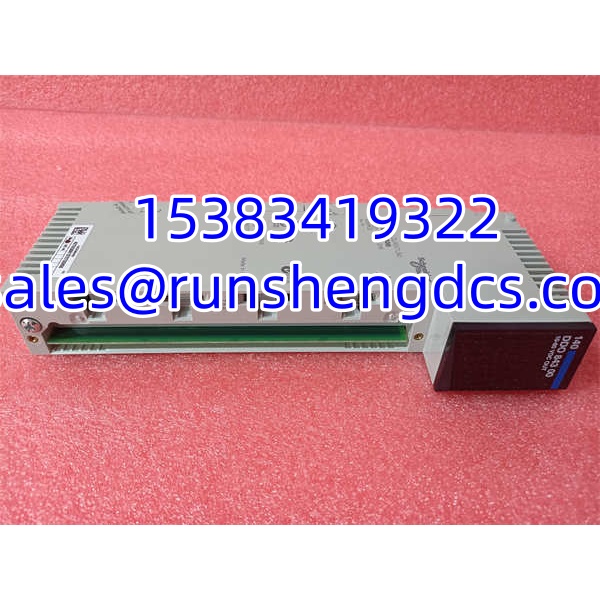
Schneider 140DDO84300
Application Scenarios
Modicon Quantum PLC digital output expansion
A process control cabinet needs additional DC on/off outputs for relays, solenoids, or pilot devices. The 140DDO84300 provides 16 outputs in a standard Quantum slot.
Water/wastewater pump or valve control
Pump stations and treatment systems often use 24 V DC or other low-voltage DC control circuits for valves, alarms, and interlocks. The module can drive those loads if voltage, current, and isolation are verified.
Manufacturing line sequence control
Assembly, packaging, conveyor, and indexing systems use discrete outputs to start/stop actuators, enable relays, or trigger alarms. The 140DDO84300 fits into existing Quantum I/O racks as a replacement or expansion module.
Building automation or infrastructure control cabinets
Older Quantum-based control panels in transit, power, HVAC, or facility systems may still rely on 140DDO84300 modules for DC discrete control.
Anonymized case study
A plant using a Modicon Quantum PLC had one output group that would not energize a bank of 24 V DC solenoid valves. The HMI showed the outputs commanded ON, but the field devices stayed off. The technician first suspected the CPU. After checking the 140DDO84300 LEDs, the group status looked normal, but one channel showed abnormal voltage drop under load. The real cause was a shorted solenoid coil on the field side, which had stressed the group circuit. The shorted valve was isolated, the group wiring was checked, and the module was bench-tested before being returned to service. The lesson: when one group fails but the rest of the card looks fine, check the field load before condemning the module.
FAQ
Is 140DDO84300 a 24 V DC output module?
It supports a 10–60 V DC output range, so it can be used with 24 V DC loads, but it is not limited to 24 V DC. Always confirm the actual field supply voltage and load requirements.
How many outputs does it have?
It has 16 discrete DC outputs, arranged as 2 groups of 8.
What is the current rating?
The rating is 2 A per point and 6 A per group. Do not assume you can run 2 A on every point at the same time without checking the group limit.
Is this module sink or source?
It is negative logic / sink. That means the output typically sinks current to the common/return side. Verify this against the existing field wiring before installation.
Can I replace another 140DDO module with 140DDO84300?
Not automatically. You must check output count, voltage range, current rating, grouping, logic type, and address requirements. Physical fit in a Quantum chassis does not guarantee functional compatibility.
What does the red fault LED mean?
It indicates an external fault condition. Common causes include field shorts, blown group protection, wiring faults, or load problems. Check the field circuit before assuming the module is defective.
Is this module still supported?
Treat it as a legacy Modicon Quantum spare. Availability is typically surplus or aftermarket. For new installations, confirm current Schneider Electric product status and replacement guidance before specifying it.