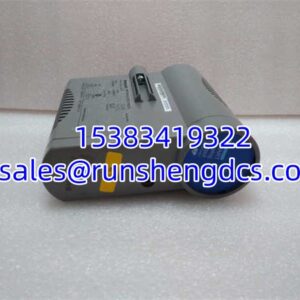
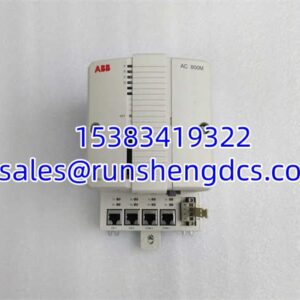
Description
Key Technical Specifications
| Parameter | Value |
|---|---|
| Product Model | VMIACC-5595-208 |
| Assembly Number | 350-805595-208L (verify on nameplate) |
| Manufacturer | GE Fanuc / GE Intelligent Platforms / VMIC legacy |
| Device Type | Reflective Memory Managed Hub / Switch |
| Compatible Nodes | GE 5565-series reflective memory cards (PCI-5565, PMC-5565, CPCI-5565, PCIE-5565, etc.) |
| Serial Line Rate | 2.12 Gbaud |
| Effective Throughput | Up to ~170-174 Mbyte/s peak (public listing) |
| Fiber Ports | Up to 8 × SFP (LC); 1×8 or 2×4 mode configurable |
| Fiber Type | Multimode or single-mode SFPs, mixable per port |
| Transmission Distance | ~300 m multimode; up to 10 km single-mode (public listing) |
| Network Scale | Up to 256 nodes via cascading |
| Topology | Star, cascaded star, ring, or hybrid |
| Fault Handling | Automatic port bypass on signal loss or invalid sync pattern |
| Management Interfaces | RS-232 serial + Ethernet (web/LAN monitoring) |
| Power Supply | AC 100-250 V, 50/60 Hz, ~1 A (universal input) |
| Power Consumption | ~25 W per public nameplate photo |
| Operating Temperature | 0 °C to +65 °C |
| Storage Temperature | -40 °C to +85 °C |
| Humidity | 20% to 80% non-condensing |
| Mechanical | Standard 19-inch 1U rack chassis; ~425 mm depth × 254 mm; front panel ~483 mm |
Product Introduction
In a reflective memory network, the hub is not a passive patch panel. It is the deterministic backbone that decides whether a failed node takes down the entire ring or simply disappears from the topology.
The GE VMIACC-5595-208 is a managed reflective memory fiber hub designed for the GE 5565-series node card family. Each SFP port regenerates the 2.12 Gbaud serial optical signal, so insertion loss and cable attenuation do not accumulate across the star network. When a port loses optical signal or a valid sync pattern, the hub bypasses that port in hardware, keeping the remaining nodes synchronized. Up to eight SFPs can be populated with multimode or single-mode transceivers, and multiple hubs can be cascaded to build networks of up to 256 nodes. Management is available through RS-232 and Ethernet, allowing status monitoring, bypass-mode selection, and per-port control without opening the chassis.
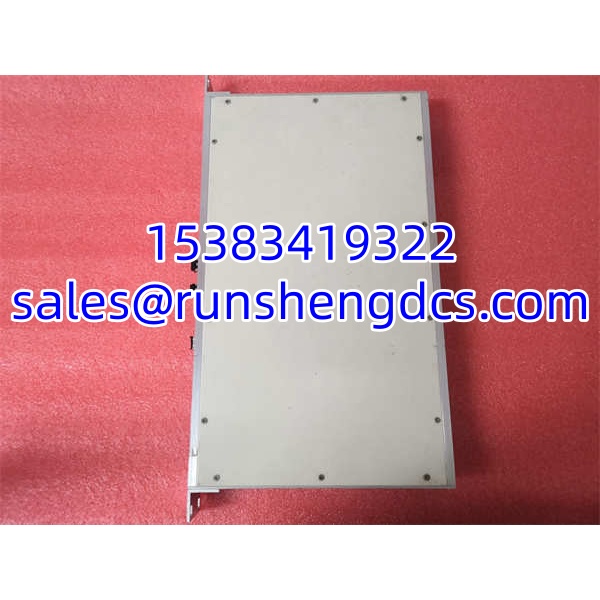
GE VMIACC-5595-208 350-805595-208L
QA/QC Transparency SOP
- Intake & Origin Verification — Confirm model VMIACC-5595-208 and assembly number 350-805595-208L. Record serial number, hardware revision, installed SFP types, and power label. Reject units with damaged SFP cages, bent rack ears, or mismatched assembly numbers.
- Live Functional Testing — Power via AC 100-250 V. Verify power-up LEDs, fan operation, Ethernet link, and RS-232 console access. Install at least two known-good 5565 node cards and confirm reflective memory synchronization across two or more ports.
- Port & Bypass Validation — Test each SFP port with multimode/single-mode fiber as available. Simulate fiber disconnect and confirm automatic bypass. Verify that reconnecting the fiber restores the node without full network reset.
- Management Interface Check — Confirm RS-232 and Ethernet access. Read port status, bypass mode, installed transceiver type, and link speed. Back up configuration only with customer authorization.
- Final QC & Packaging — Record test results, installed SFP types, firmware/revision if readable, and condition. Package with SFP dust caps, terminal/power cable, and ESD protection. Surplus units are not represented as factory-new unless original sealed packaging is verified.
Field Engineer Gotchas
- “-208” usually means 8-port multimode, but SFPs can be swapped. Always verify whether the installed SFPs are multimode or single-mode. Mixing them incorrectly causes link failures even when the hub itself is healthy.
- This is not an Ethernet switch. Connecting it to a LAN or expecting IP traffic through the SFP ports will not work. Only the dedicated Ethernet management port carries IP traffic.
- Bypass mode matters. Some installations configure bypass on loss of light; others require loss of valid sync pattern. The wrong mode can mask a marginal fiber link or cause unnecessary bypass events.
- Cascading requires correct topology planning. Adding hubs increases node count but also increases timing dependencies. Verify that all 5565 node cards and firmware revisions support the intended cascade depth.
- Power label discrepancies exist. Some public nameplate photos show AC 100-250 V, ~25 W, 1 A fuse. Other third-party listings cite wider ranges. Trust the physical nameplate over generic catalog text.
- Legacy GE/VMIC branding. These units may carry GE Fanuc, GE Intelligent Platforms, VMIC, or Abaco-era references. The hardware can still be valid, but firmware, manuals, and support channels may have migrated.
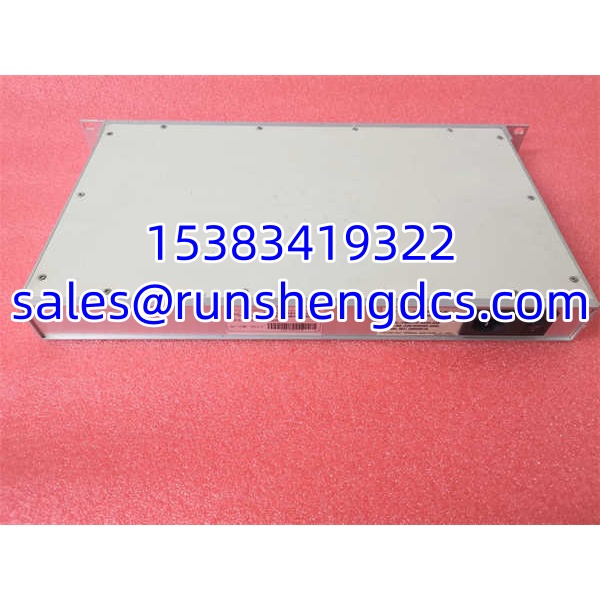
GE VMIACC-5595-208 350-805595-208L
Application Scenarios
- Turbine test cell with multiple real-time controllers. Several PCI-5565/PCIE-5565 nodes share sensor data through the VMIACC-5595-208. If one simulation node loses fiber, the hub bypasses it and the remaining nodes continue running.
- Aerospace HIL rack. The hub connects flight-control simulators, actuator drivers, and instrumentation PCs. Deterministic memory replication avoids Ethernet jitter during closed-loop testing.
- Power plant protection test bench. Multiple relay test sets and RTDS-style nodes exchange trip signals through reflective memory. The managed hub provides visible port status and remote diagnostics through Ethernet.
- Multi-rack industrial simulation. Two or more ACC-5595 hubs are cascaded to connect more than eight nodes. Multimode SFPs handle intra-rack links; single-mode SFPs bridge to remote test bays.
FAQ
Is VMIACC-5595-208 the same as ACC-5595-208?
Functionally yes. “VMIACC-5595-208” is the VMIC/GE-era full part designation; “ACC-5595-208” is the common short form. Always confirm the assembly number and installed SFPs.
Can I use it with non-GE reflective memory cards?
It is designed for the GE 5565-series reflective memory family. Third-party or legacy VMIC-compatible cards may work, but compatibility must be validated per node card and firmware.
Does it support single-mode fiber?
Yes, if single-mode SFPs are installed. The hub itself accepts standard SFP transceivers; distance and mode depend on the SFPs and fiber plant.
What is the maximum number of nodes?
Up to 256 nodes via cascading multiple hubs, per public documentation.
Can I monitor it from the DCS?
Indirectly. The hub provides RS-232 and Ethernet management. A gateway or polling script can read port status and forward alarms into the DCS or SCADA system.
Is this unit still supported by GE?
GE Intelligent Platforms embedded products have transitioned through Abaco Systems and other successors. Official support status depends on the current product lineage. For critical systems, maintain tested spares on site.
Will it work if only one port is connected?
Yes. Unused SFP ports do not need to be populated. The hub operates with 1 to 8 active ports.